
How to Choose Landscape Art That Elevates Your Space
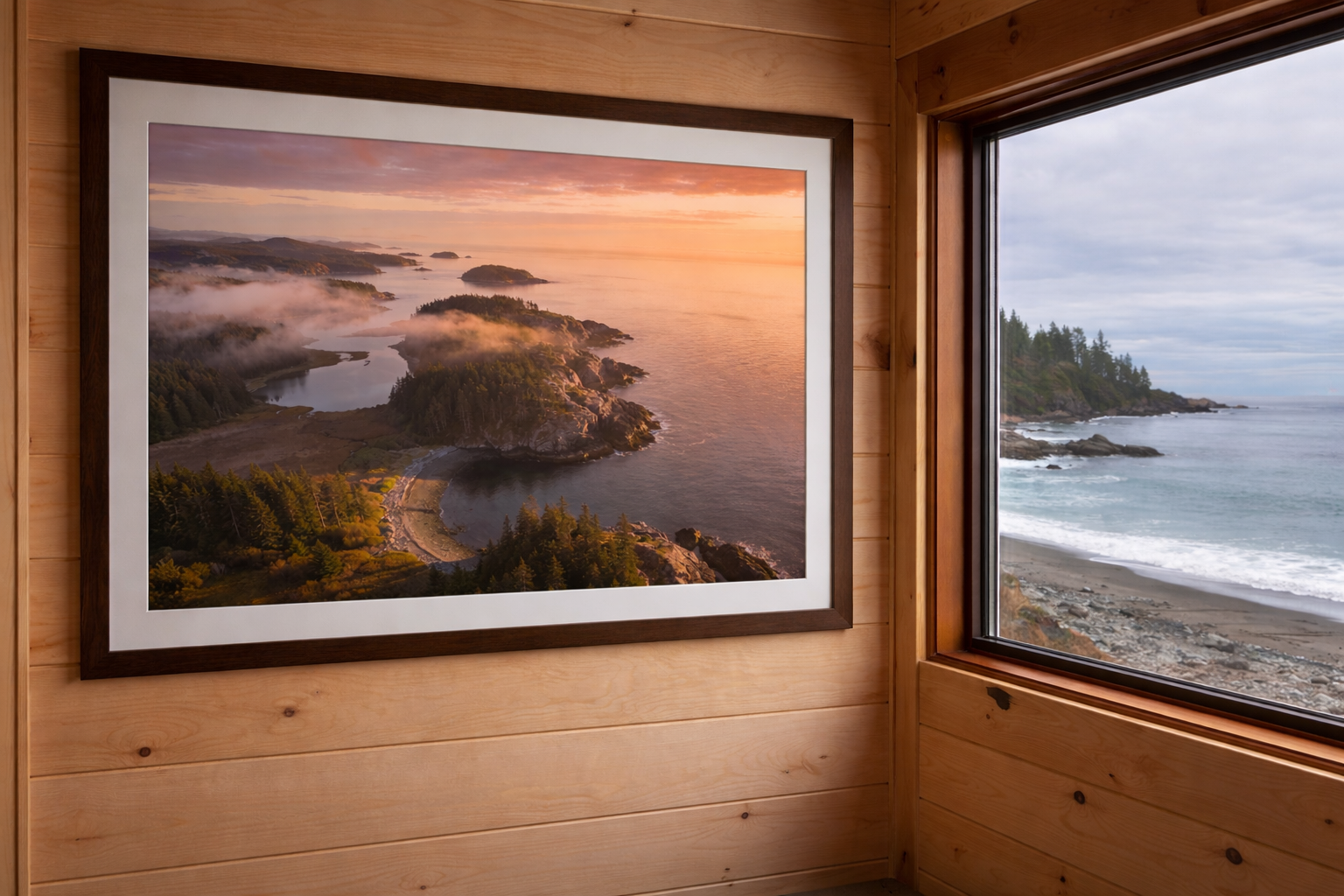
This guide breaks down how to choose landscape photography and fine art prints that genuinely elevate a room, create emotional depth, and feel intentional rather than decorative.
Most people choose wall art backwards.
They pick something because it “matches the couch,” fills a gap, or looks good in isolation on a white website background. Then they hang it in a real room, and it falls flat.
The truth is this: Great landscape art doesn’t decorate a space. It changes the atmosphere of the space.
1. Start With Feeling, Not Subject Matter
Before you think about mountains, forests, oceans, or rivers, ask a different question:
What do I want this space to feel like when I walk in?
Landscape photography works best when it reinforces a mood, not just a location.
Calm and spacious → minimal compositions, open horizons, soft light
Grounded and earthy → dense forests, textured terrain, moody weather
Inspired and expansive → wide vistas, dramatic scale, strong perspective lines
Quiet and introspective → fog, dusk, negative space, subdued tones
If you start with emotion, the subject will naturally follow.
2. Match Energy, Not Color Swatches
A common mistake is matching artwork to pillows, furniture, or paint color.
That’s surface-level design thinking.
Instead, match energy level:
Busy room → calm, minimal landscape print
Minimal room → bold, high-contrast landscape with presence
Warm interiors → earthy tones (sand, forest green, stone, amber light)
Cool interiors → mist, glacier tones, ocean blues, shadow-heavy scenes
A powerful landscape print doesn’t “blend in” it ties the whole room together
3. Scale Is What Makes It Feel Expensive
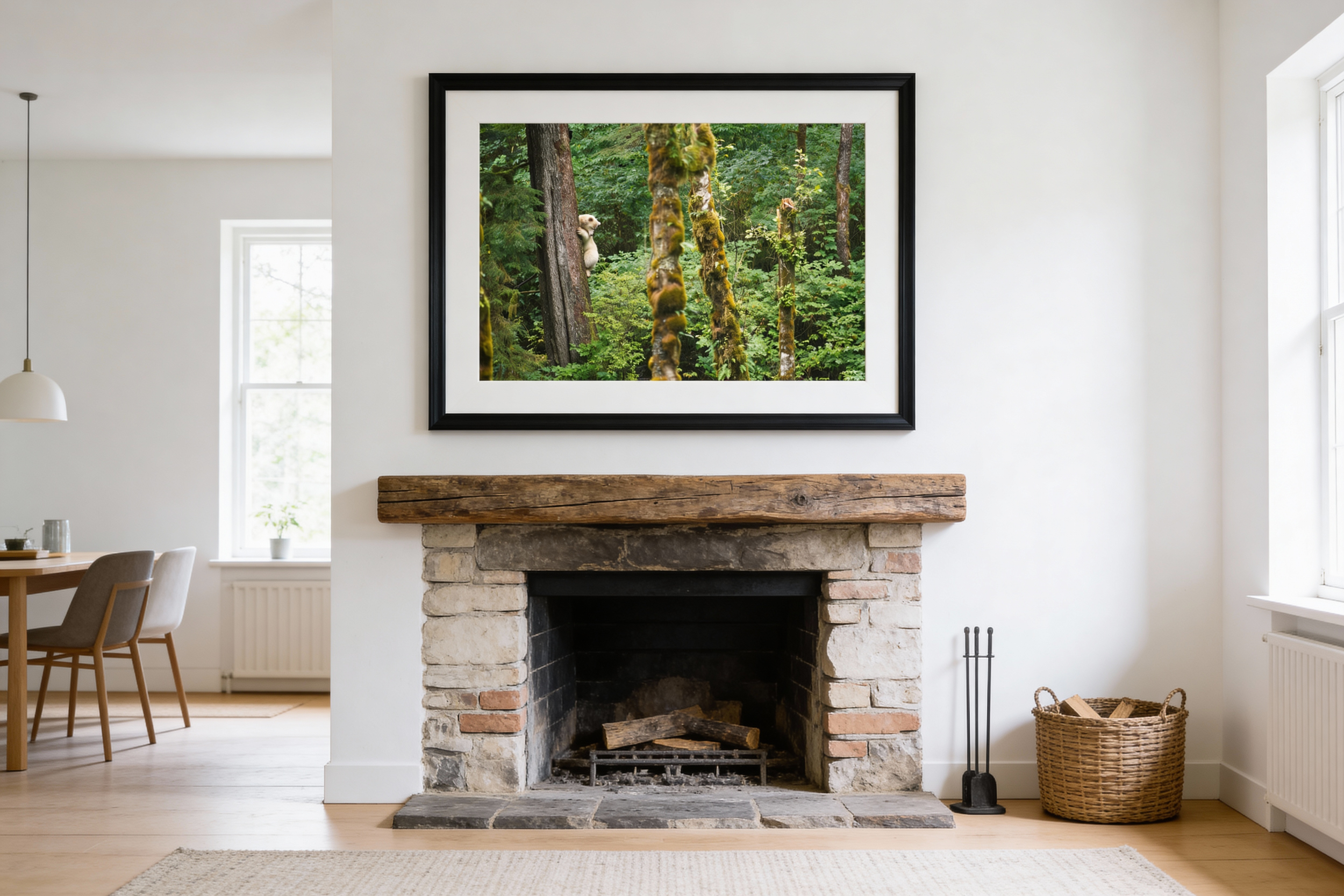
Most people hang art too small.
This is the fastest way to make a space feel unfinished.
Landscape photography in particular thrives on scale because it mirrors how we experience nature in real life, wide, immersive, and expansive.
Rule of thumb:
If you’re unsure, go larger than you think
One large statement piece beats multiple small distractions
A properly scaled print turns a wall into a window.
4. Light Matters More Than People Think
Landscape art is essentially captured light.
So the direction, softness, and timing of light in the image determines how it feels in your home.
Golden light → warmth, nostalgia, human connection
Overcast light → calm, neutrality, timelessness
Backlit scenes → depth, drama, atmosphere
Low light / dawn / dusk → introspection, quiet energy
This is why two images of the same mountain can feel completely different.
5. Choose Work That Holds Up Over Time
Trendy prints age fast. Strong landscape photography doesn’t.
Look for:
Timeless compositions (not gimmicky angles)
Natural color grading (not over-processed tones)
Emotional clarity (you feel something immediately)
Scenes you wouldn’t get tired of seeing every day
Good landscape art doesn’t scream for attention—it earns it slowly over time.
6. Think Like You’re Designing a Window, Not a Wall
The best landscape prints function like a window into another place.
When done well, they:
Expand perceived space in a room
Create depth where there is none
Add psychological breathing room
Break up architectural monotony
This is why minimal, well-framed nature photography is often more powerful than complex decorative art.
You’re not filling space—you’re extending it.
7. Why Fine Art Landscape Photography Works So Well in Modern Interiors
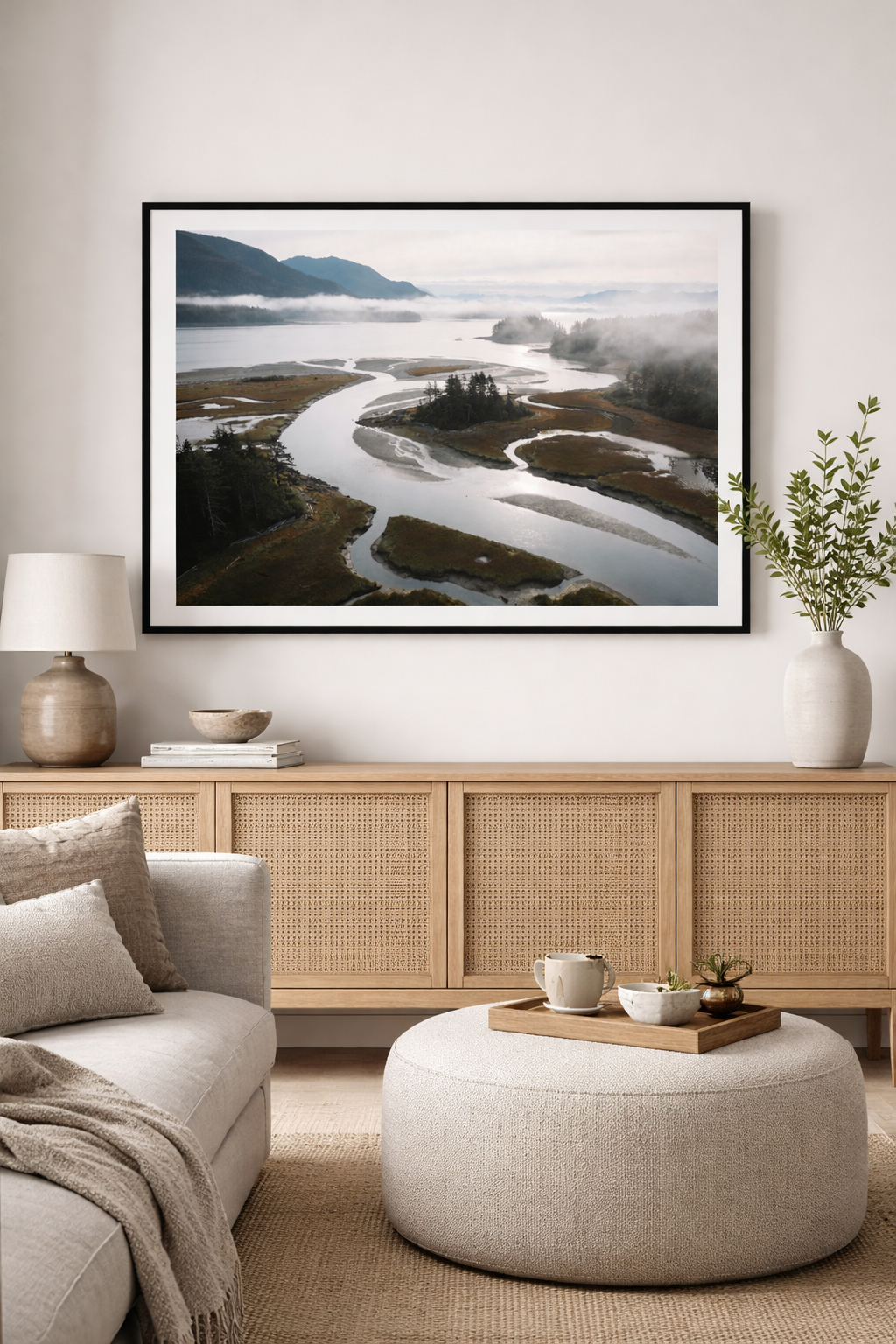
Modern homes tend to be clean, minimal, and geometric.
Nature photography introduces what architecture removes:
randomness
organic texture
imperfect beauty
emotional grounding
That contrast is what creates visual interest.
Without it, a space can feel sterile. With it, it feels complete.
8. What to Look For in a Print Source
If you’re investing in landscape art, quality matters just as much as the image.
Look for:
Archival or fine art printing methods
Limited edition runs (for uniqueness and collectibility)
Intentional framing options (black, white matte, gallery style)
High-resolution capture (so large prints hold detail)
A great photograph deserves materials that match its longevity.
9. The Real Goal: A Space That Feels Intentional
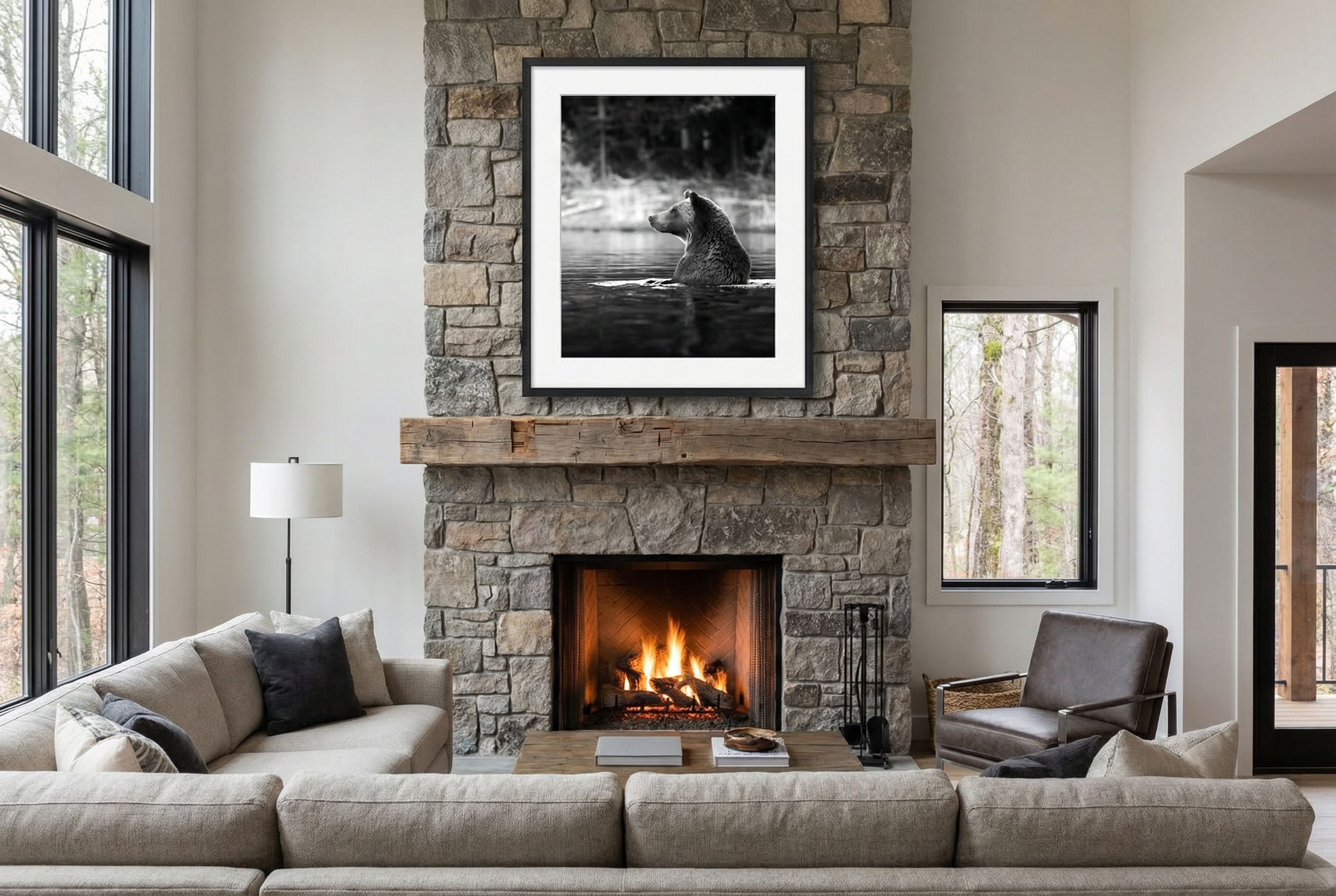
At the end of the day, landscape art isn’t about decoration.
It’s about identity.
The right piece should make your space feel like:
it has depth
it has calm
it has intention
it reflects how you want to live
When someone walks in, they shouldn’t just notice the art.
They should feel the room makes sense. If you’re ready to bring art into your own space, you can explore my full collection of fine art landscape prints here:
