
How to Choose Landscape Art That Elevates Your Space
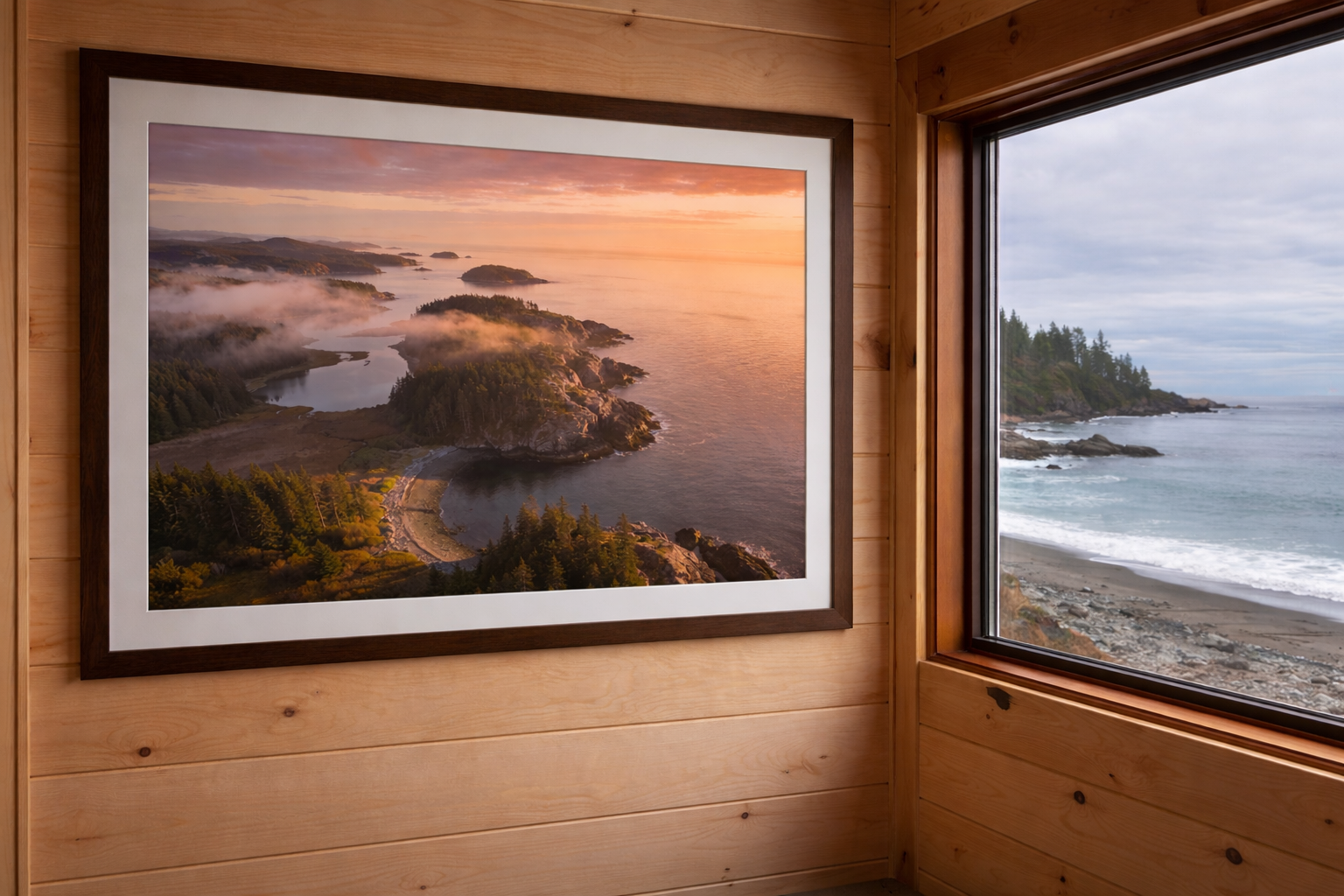
This guide breaks down how to choose landscape photography and fine art prints that genuinely elevate a room, create emotional depth, and feel intentional rather than decorative.
Most people choose wall art backwards.
They pick something because it “matches the couch,” fills a gap, or looks good in isolation on a white website background. Then they hang it in a real room, and it falls flat.
The truth is this: Great landscape art doesn’t decorate a space. It changes the atmosphere of the space.
1. Start With Feeling, Not Subject Matter
Before you think about mountains, forests, oceans, or rivers, ask a different question:
What do I want this space to feel like when I walk in?
Landscape photography works best when it reinforces a mood, not just a location.
Calm and spacious → minimal compositions, open horizons, soft light
Grounded and earthy → dense forests, textured terrain, moody weather
Inspired and expansive → wide vistas, dramatic scale, strong perspective lines
Quiet and introspective → fog, dusk, negative space, subdued tones
If you start with emotion, the subject will naturally follow.
2. Match Energy, Not Color Swatches
A common mistake is matching artwork to pillows, furniture, or paint color.
That’s surface-level design thinking.
Instead, match energy level:
Busy room → calm, minimal landscape print
Minimal room → bold, high-contrast landscape with presence
Warm interiors → earthy tones (sand, forest green, stone, amber light)
Cool interiors → mist, glacier tones, ocean blues, shadow-heavy scenes
A powerful landscape print doesn’t “blend in” it ties the whole room together
3. Scale Is What Makes It Feel Expensive
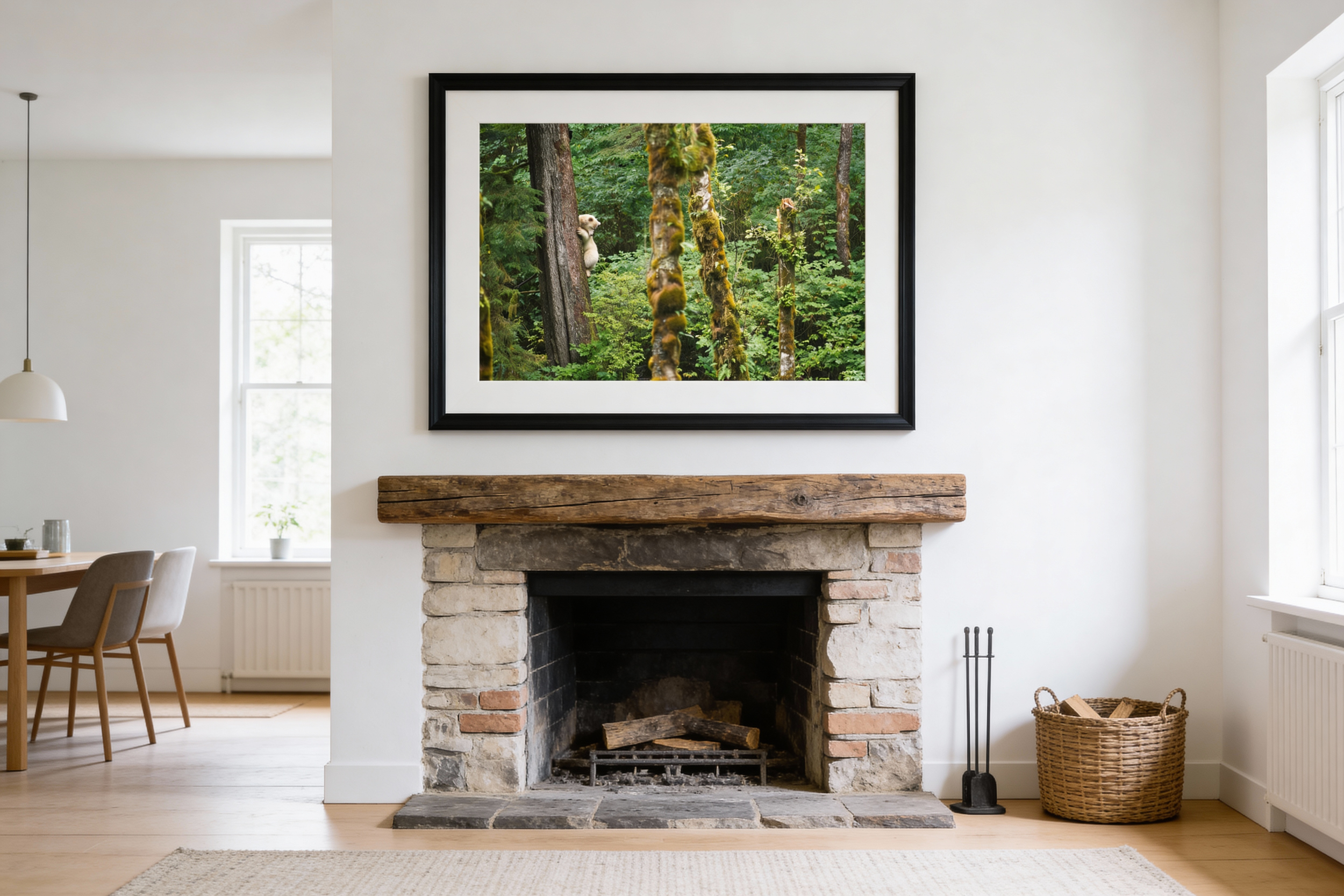
Most people hang art too small.
This is the fastest way to make a space feel unfinished.
Landscape photography in particular thrives on scale because it mirrors how we experience nature in real life, wide, immersive, and expansive.
Rule of thumb:
If you’re unsure, go larger than you think
One large statement piece beats multiple small distractions
A properly scaled print turns a wall into a window.
4. Light Matters More Than People Think
Landscape art is essentially captured light.
So the direction, softness, and timing of light in the image determines how it feels in your home.
Golden light → warmth, nostalgia, human connection
Overcast light → calm, neutrality, timelessness
Backlit scenes → depth, drama, atmosphere
Low light / dawn / dusk → introspection, quiet energy
This is why two images of the same mountain can feel completely different.
5. Choose Work That Holds Up Over Time
Trendy prints age fast. Strong landscape photography doesn’t.
Look for:
Timeless compositions (not gimmicky angles)
Natural color grading (not over-processed tones)
Emotional clarity (you feel something immediately)
Scenes you wouldn’t get tired of seeing every day
Good landscape art doesn’t scream for attention—it earns it slowly over time.
6. Think Like You’re Designing a Window, Not a Wall
The best landscape prints function like a window into another place.
When done well, they:
Expand perceived space in a room
Create depth where there is none
Add psychological breathing room
Break up architectural monotony
This is why minimal, well-framed nature photography is often more powerful than complex decorative art.
You’re not filling space—you’re extending it.
7. Why Fine Art Landscape Photography Works So Well in Modern Interiors
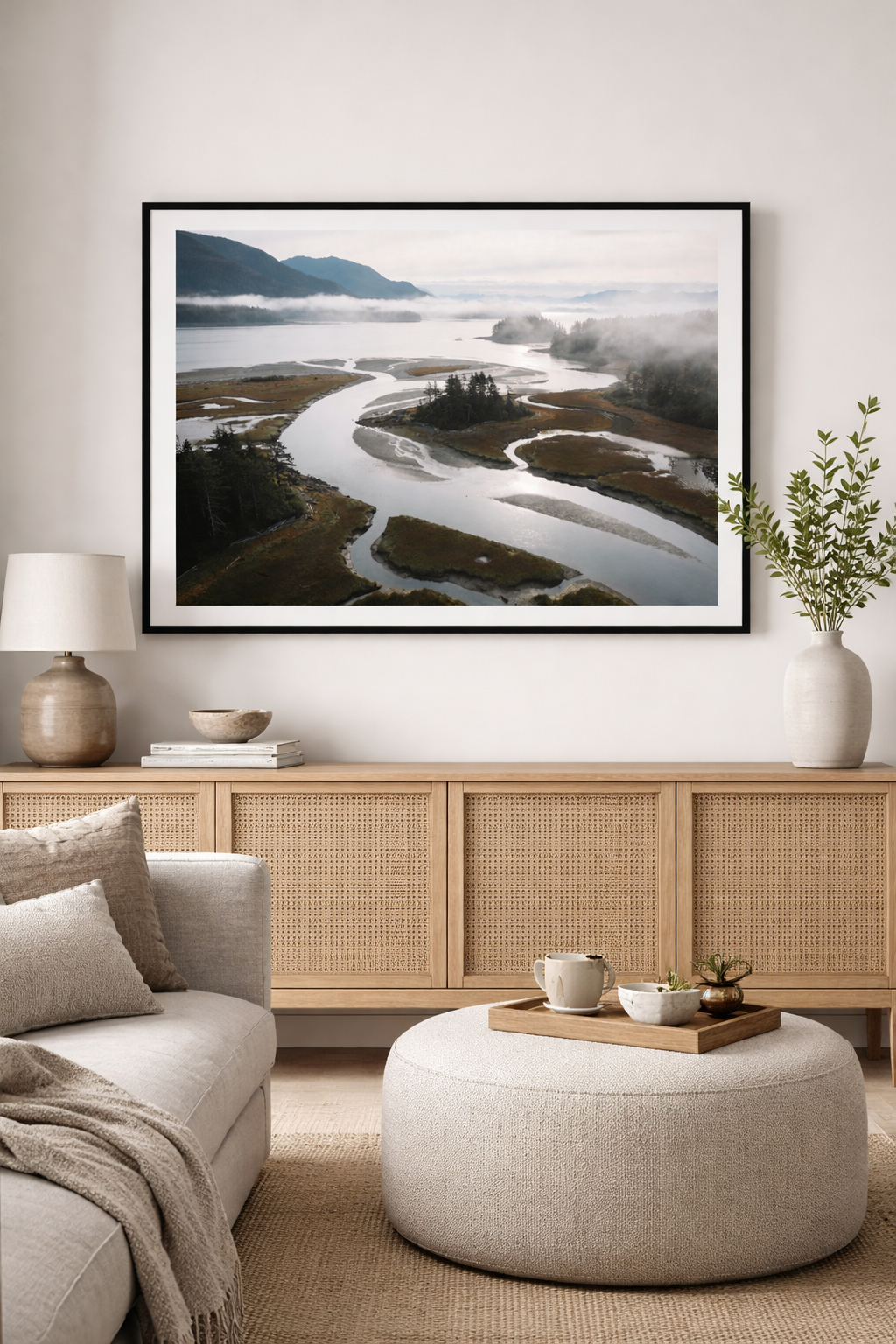
Modern homes tend to be clean, minimal, and geometric.
Nature photography introduces what architecture removes:
randomness
organic texture
imperfect beauty
emotional grounding
That contrast is what creates visual interest.
Without it, a space can feel sterile. With it, it feels complete.
8. What to Look For in a Print Source
If you’re investing in landscape art, quality matters just as much as the image.
Look for:
Archival or fine art printing methods
Limited edition runs (for uniqueness and collectibility)
Intentional framing options (black, white matte, gallery style)
High-resolution capture (so large prints hold detail)
A great photograph deserves materials that match its longevity.
9. The Real Goal: A Space That Feels Intentional
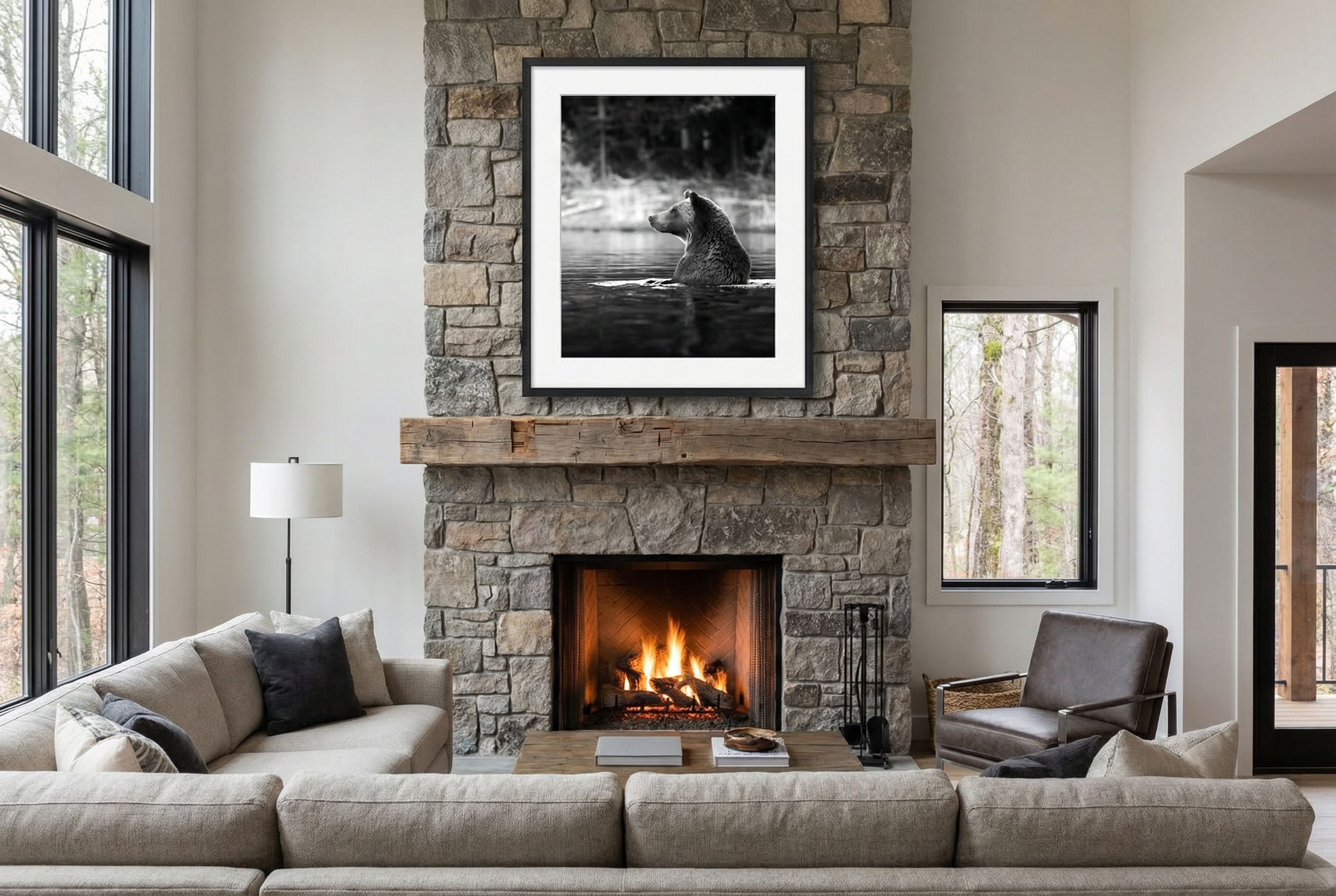
At the end of the day, landscape art isn’t about decoration.
It’s about identity.
The right piece should make your space feel like:
it has depth
it has calm
it has intention
it reflects how you want to live
When someone walks in, they shouldn’t just notice the art.
They should feel the room makes sense. If you’re ready to bring art into your own space, you can explore my full collection of fine art landscape prints here:
Great Bear Rainforest Wildlife Photography Guide: Spirit Bears, Coastal Wolves & Why This Ecosystem Matters
Great Bear Rainforest Wildlife Photography Guide: Spirit Bears, Coastal Wolves & Why This Ecosystem Matters
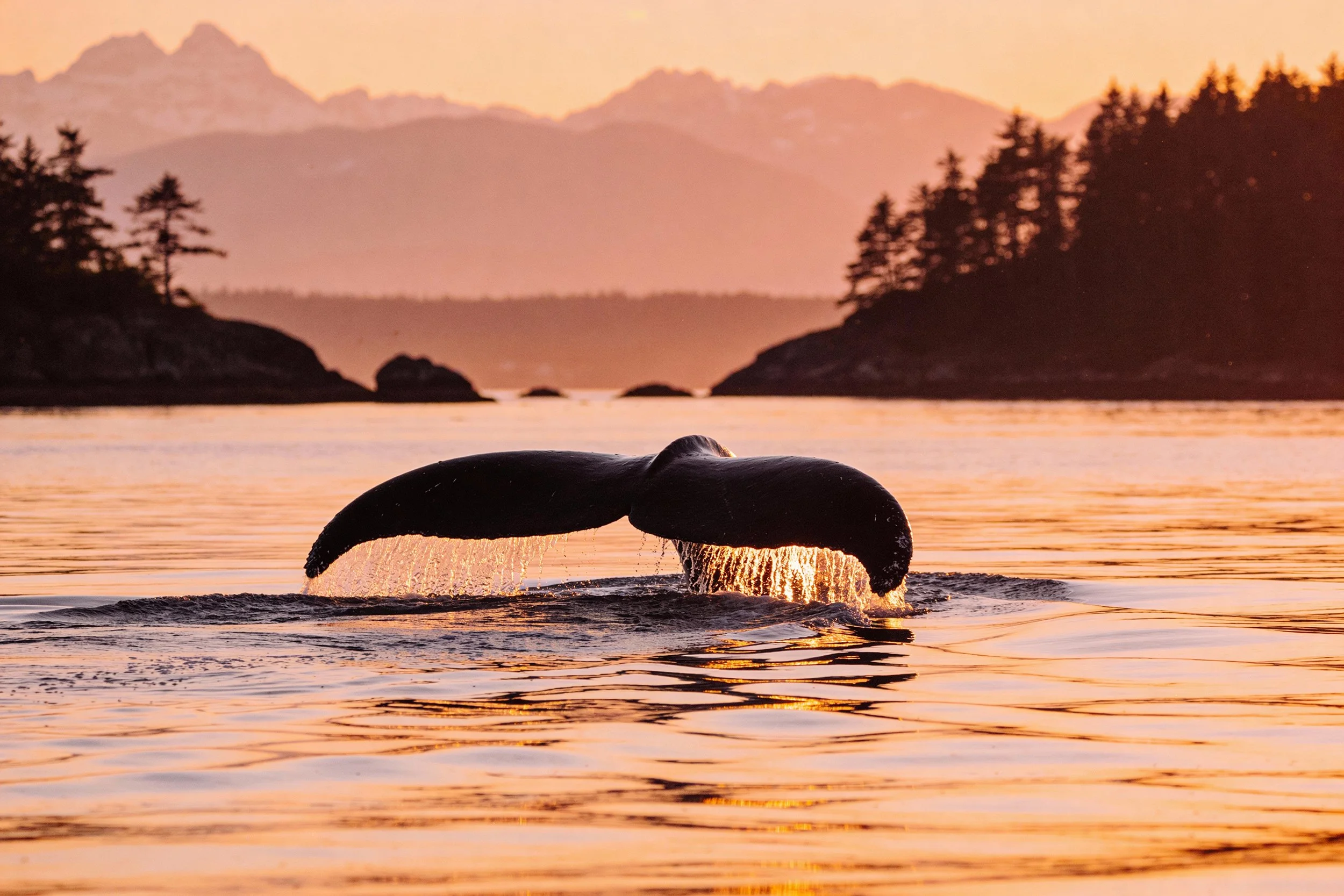
There are places that feel untouched, and then there are places that feel ancient. The Great Bear Rainforest belongs to the latter, a landscape so vast and layered with life that it doesn’t just exist in the present. Moss drapes from old-growth giants like something out of a forgotten world. The ocean moves along the rugged coast, where whales travel with quiet purpose, shaping the steady rhythm of the seasons. And for those who step into it with a camera, it offers something far beyond images.
Why the Great Bear Rainforest Matters
The Great Bear Rainforest is one of the largest remaining intact temperate rainforests on Earth. Stretching along the central and northern coast of British Columbia, it holds an ecological significance that goes well beyond its borders. Towering cedar and spruce forests store massive amounts of carbon, acting as a natural buffer against climate change. Salmon-bearing rivers fuel entire ecosystems, feeding everything from wolves to eagles to the bears that have come to symbolize the region.
But its importance isn’t just ecological, it’s cultural. This land has been stewarded for thousands of years by Indigenous nations, including the Kitasoo/Xai’xais, Heiltsuk, and Gitga’at. Their knowledge, stories, and governance have been essential in protecting this place in a way that modern conservation alone could not achieve.
A Photographer’s Dream (and Challenge)
For wildlife photographers, the Great Bear Rainforest is as close as it gets to a pilgrimage site. It’s not easy. The weather is unpredictable, access is limited, and the conditions demand patience and respect. But that’s exactly what makes it so powerful.
This is a place where you can’t chase wildlife, you wait, you listen, and you become part of the environment. Coastal wolves move like ghosts along the shoreline. Bald eagles gather in numbers that feel almost surreal during salmon runs. And then there are the bears.
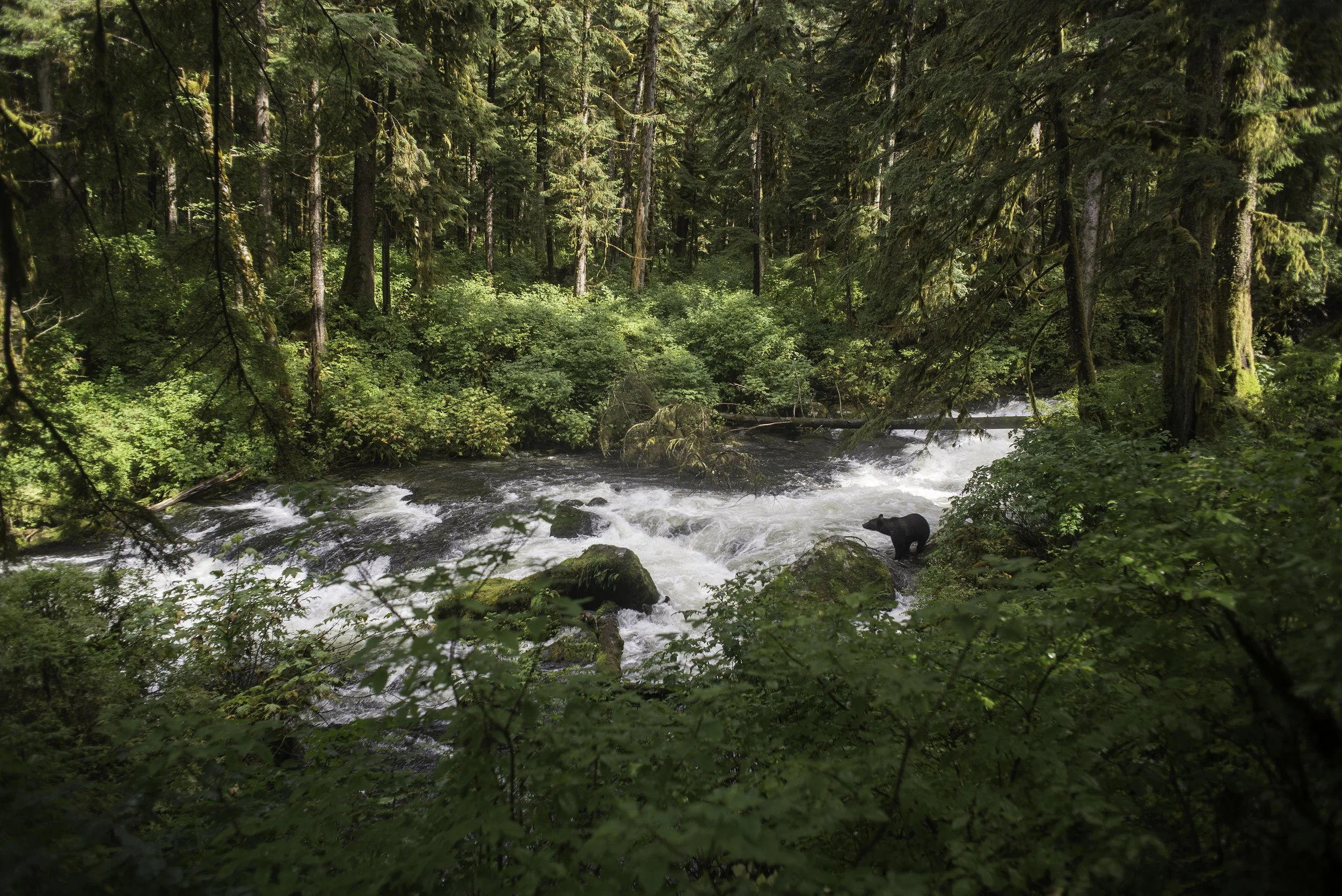
Photographing bears here is not just about proximity or technical skill. It’s about timing, understanding behavior, and being present in a way that allows the moment to unfold naturally. The images that come out of this place can be spectacular when everything aligns.
The Spirit Bear: More Than an Animal
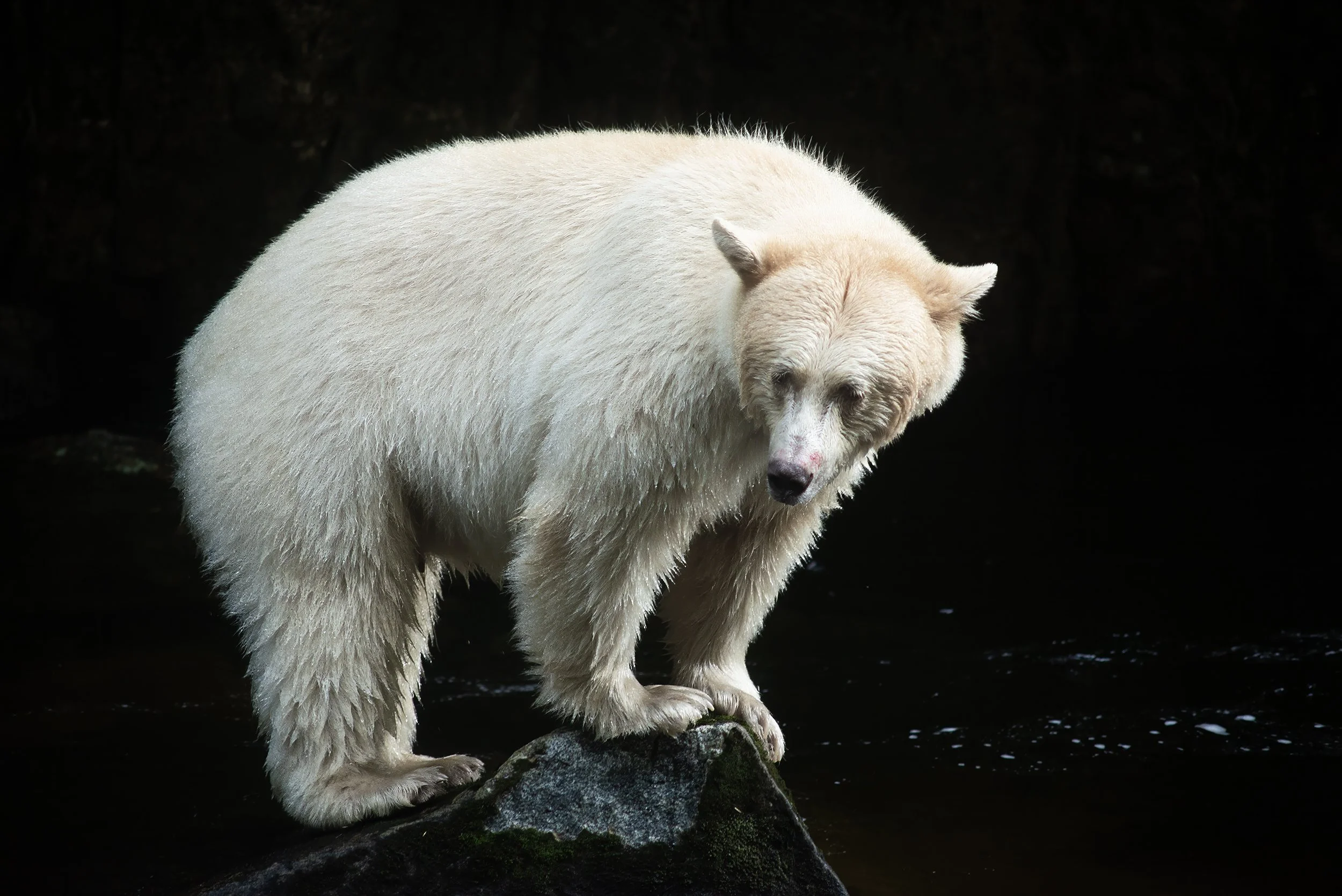
Among the most iconic and elusive subjects in the rainforest is the spirit bear, a rare white variant of the black bear known scientifically as the Kermode bear. Unlike polar bears, their white fur isn’t tied to snow or ice, it’s the result of a recessive gene passed through generations. But to reduce the spirit bear to genetics misses the point entirely.
To the Indigenous peoples of the region, the spirit bear holds deep cultural and spiritual significance. It is a symbol of balance, a reminder, and a teacher. One story, shared by local communities, tells of Raven, the trickster and creator, who turned one in every ten black bears white. Not as an accident, but as a deliberate act, to remind the people of the time when ice covered the land, of the last great glacial age, and of the importance of remembering where we come from. That story reframes everything. The spirit bear isn’t rare just because of biology.
Finding the Spirit Bear
If you go looking for a spirit bear with the mindset of “getting the shot,” you’ll likely leave disappointed. Sightings are never guaranteed. Days can pass in silence, with nothing but rain and the slow movement of rivers. But that’s part of the experience.
Finding a spirit bear requires humility. It requires listening to guides who know the land intimately, respecting the rhythms of the forest, and accepting that the encounter, if it happens, is a privilege, not a right. And when it does happen, it doesn’t feel like a victory. It feels like a moment you were allowed to witness.
The Wolves That Still Elude Me
If there’s one subject that has tested me more than any other in this landscape, it’s the Coastal Sea Wolf. Throughout my guiding career, I’ve spent days waiting for them. Long, quiet days on shorelines, and lagoons, watching tides shift and forests breathe. I’ve seen a few along the way, brief crossings, distant figures moving with that unmistakable shape, but I’ve never captured a photograph of a wolf that I’m truly proud of. It remains one of the biggest holes in my portfolio. And I’m okay with that.
Because the wolf isn’t something you force. It’s an animal I respect more than almost any other, intelligent, adaptable, deeply connected to this coastline and our best friends are their descendants. Until I earn that photograph, until everything aligns in a way that feels right, I won’t publish a wolf image. Some subjects aren’t about checking a box.
The Book That Changed Everything
For me, the Great Bear Rainforest didn’t start with a trip, it started at a kitchen table.
Over 15 years ago, I came across The Last Wild Wolves by Ian McAllister. I remember flipping through its pages, seeing images that didn’t look real, wolves moving through mist, coastlines that felt untouched, a sense of wildness that I only believed was in my dreams. Looking back, it’s hard to overstate the impact. That single book set a trajectory that shaped how I see the world and what I choose to pursue.
More Than a Destination
The Great Bear Rainforest isn’t just a location for photographers chasing portfolio shots. It’s a place that challenges your pace, your expectations, and your relationship with nature. It forces you to slow down. To observe instead of control. And maybe that’s the real reason it matters.
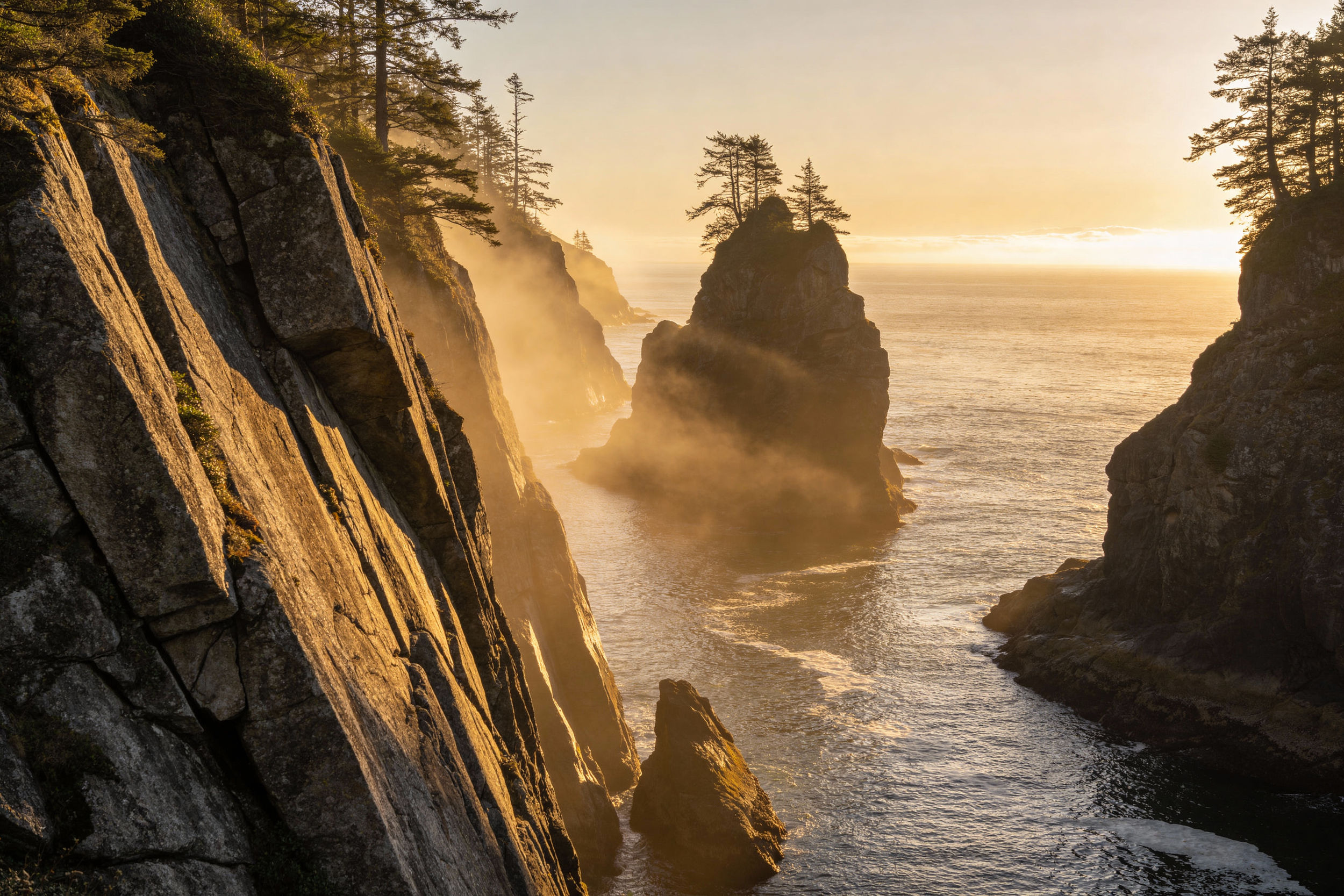
Because in a world that moves faster every year, places like this remind us that some things still operate on their own time. That some stories are older than us. And that sometimes, the most powerful images are the ones that come from simply being present in a place that doesn’t need you.
The Ultimate Guide to Wildlife Photography in British Columbia
British Columbia is one of the last places on Earth where large ecosystems still function in a relatively intact way. Salmon still return by the millions. Forests stretch unbroken for hundreds of kilometres. And where these systems remain healthy, wildlife concentrations can reach extraordinary levels.
For wildlife photographers, this creates opportunities that are rare almost anywhere else in the world.
But photographing wildlife in British Columbia isn’t just about wandering into the forest and hoping to see something. The best wildlife photographers in this province understand a deeper truth: animals gather where food concentrates.
If you learn how to follow these food cycles, especially the herring spawn in spring and the salmon runs in late summer and fall, you can dramatically increase your chances of seeing, and photographing, wildlife.
This guide breaks down the ecological events, locations, and field strategies that can turn British Columbia into one of the most rewarding wildlife photography destinations on the planet.
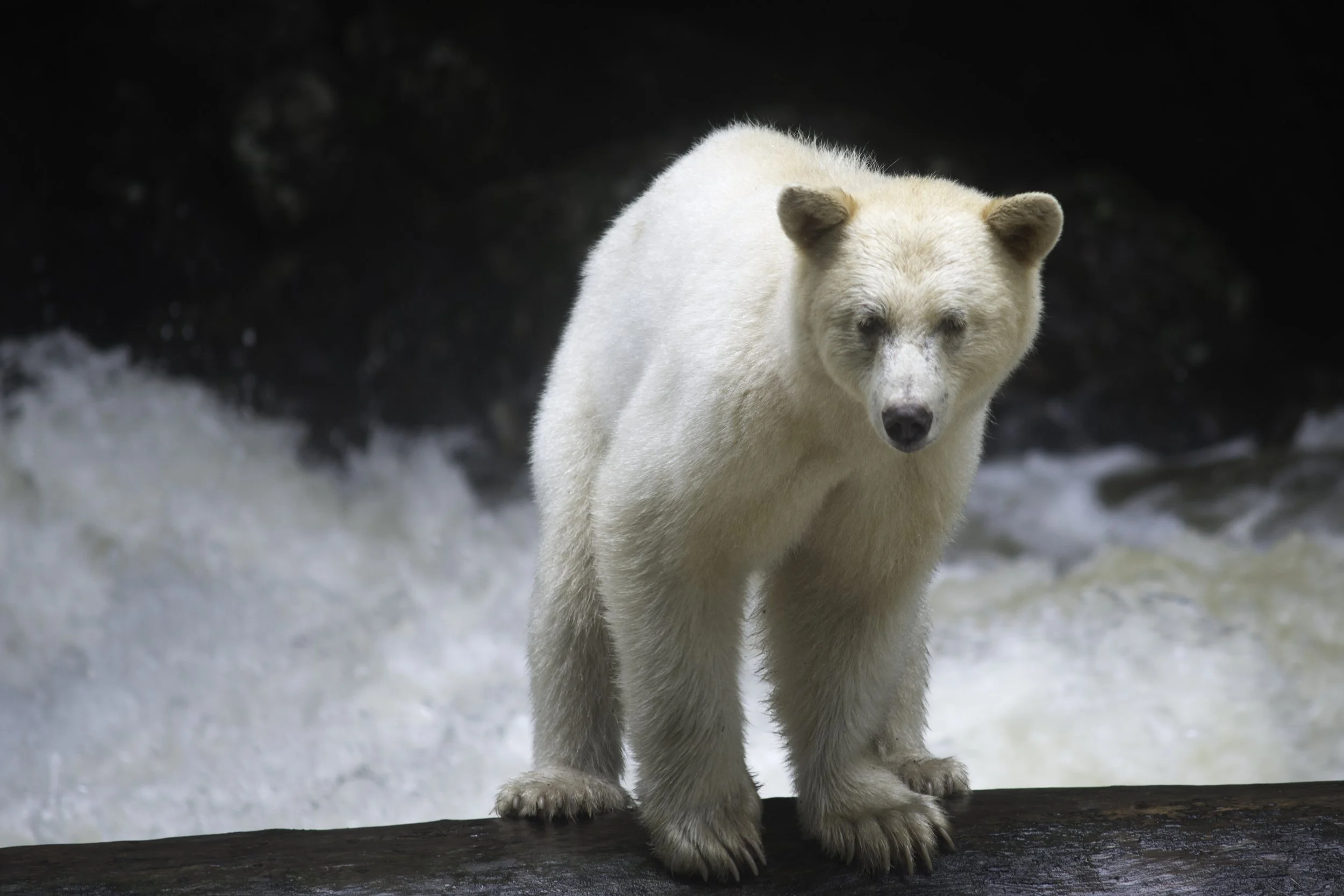
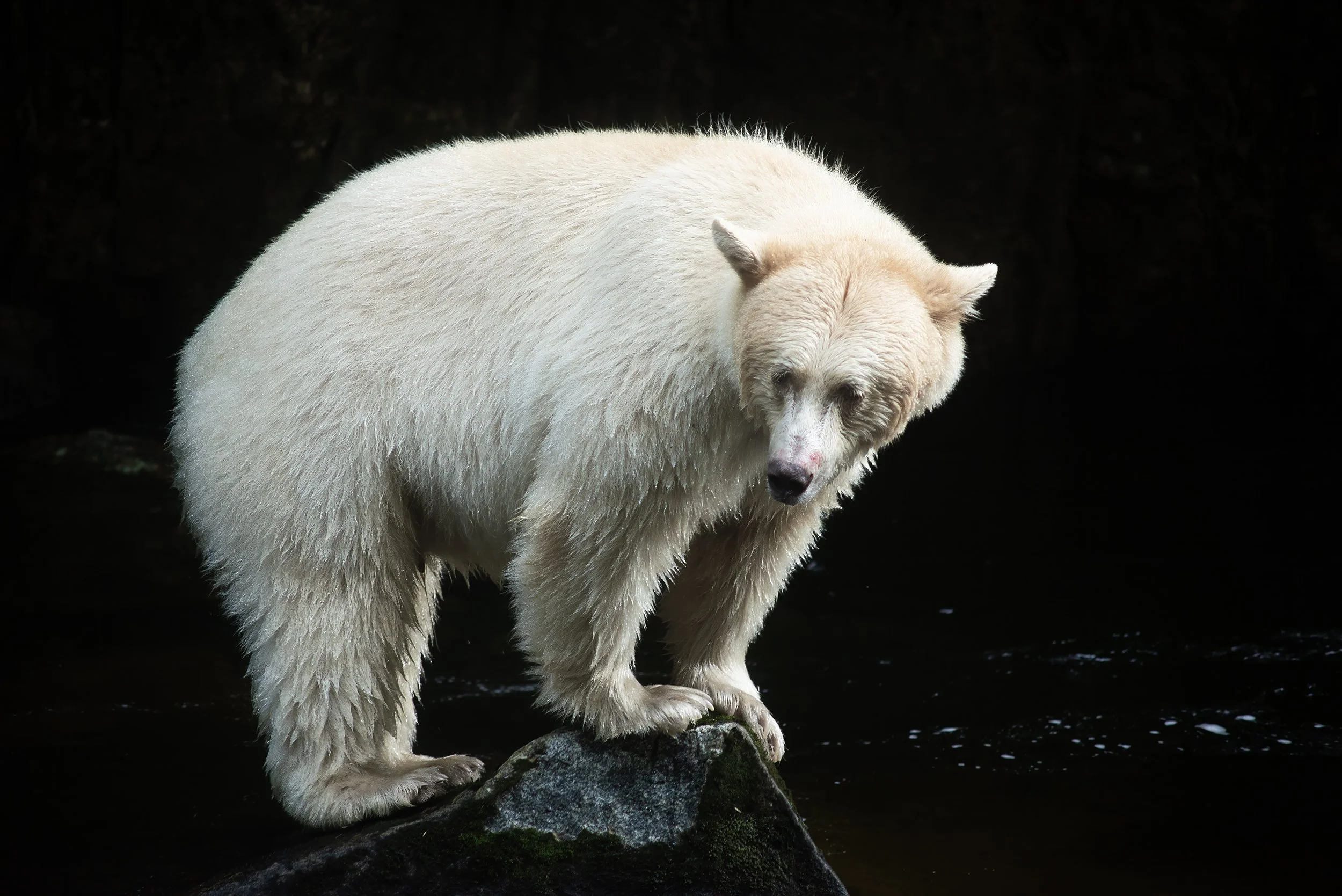
a young spirit bear, watching coho salmon jump up the rapids, waiting for his perfect catch.
Understanding the Ecosystem: Follow the Food
Before talking about specific animals, lenses, or camera settings, the most important concept in wildlife photography here is simple:
Follow the food.
In British Columbia, two events drive massive wildlife concentrations:
The Pacific herring spawn
The Pacific salmon runs

herring roe with on rock weed, along Vancouver island.
These two natural events create food pulses that ripple through the entire coastal ecosystem. When they happen, animals that are normally elusive or widely distributed suddenly concentrate in predictable areas.
And for photographers, predictability is everything.
The Spring Herring Spawn: One of the Most Underrated Wildlife Events on Earth
Every spring, along the coast of British Columbia, Pacific herring return to shallow coastal waters to spawn.
The spawn itself is spectacular.
Millions of fish release eggs and milt into the water, turning entire bays a pale turquoise color. Kelp, rocks, and shoreline vegetation become coated in sticky layers of eggs.
But what makes this event extraordinary is what happens next.
The spawn triggers an explosion of wildlife activity.
Predators arrive from all directions:
Bald eagles gather in the hundreds
Black bears patrol the beaches
Sea lions and seals gorge offshore
Wolves move along the coastline searching for easy meals
Migratory birds fill the skies
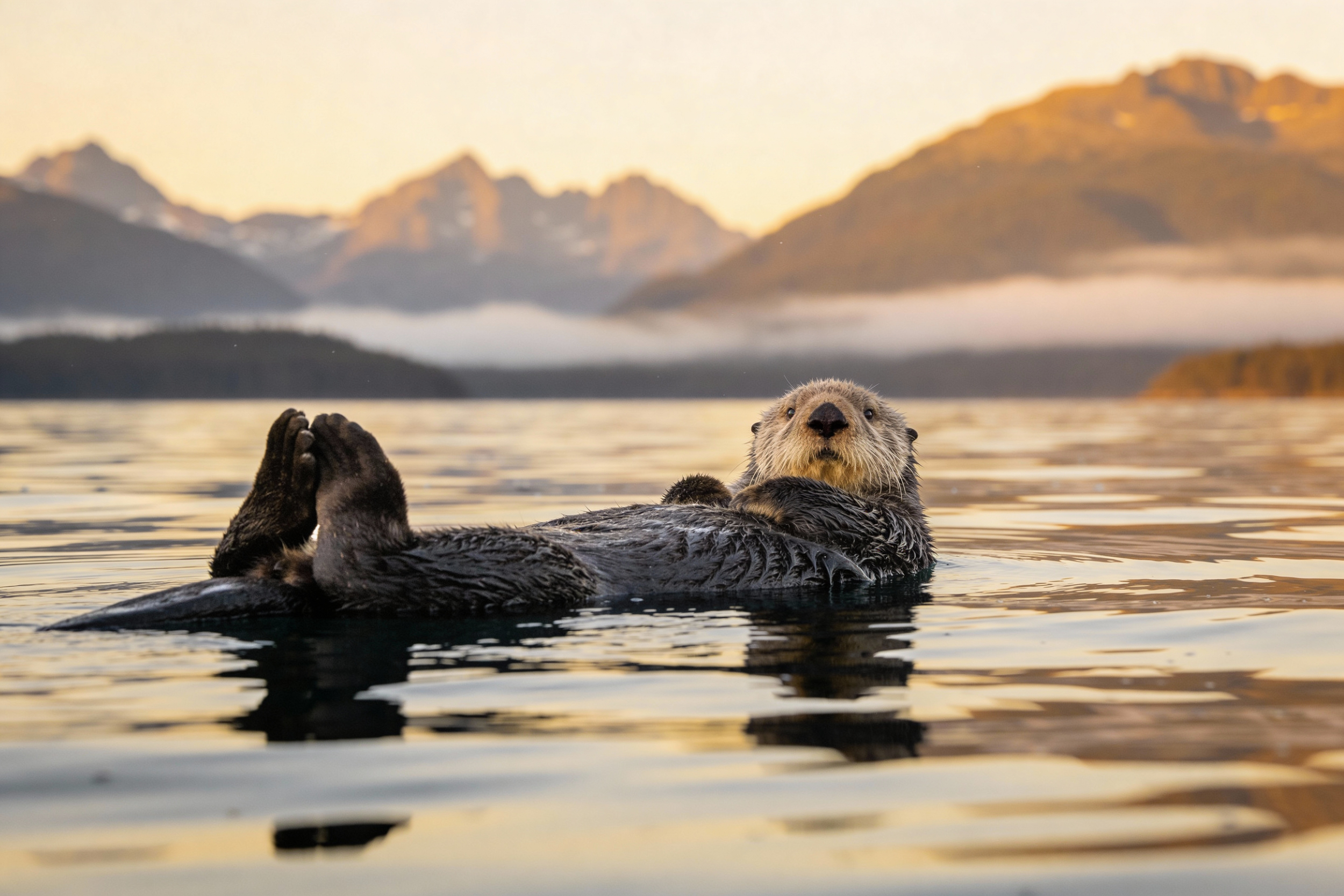
orca feed on sea lions and fish
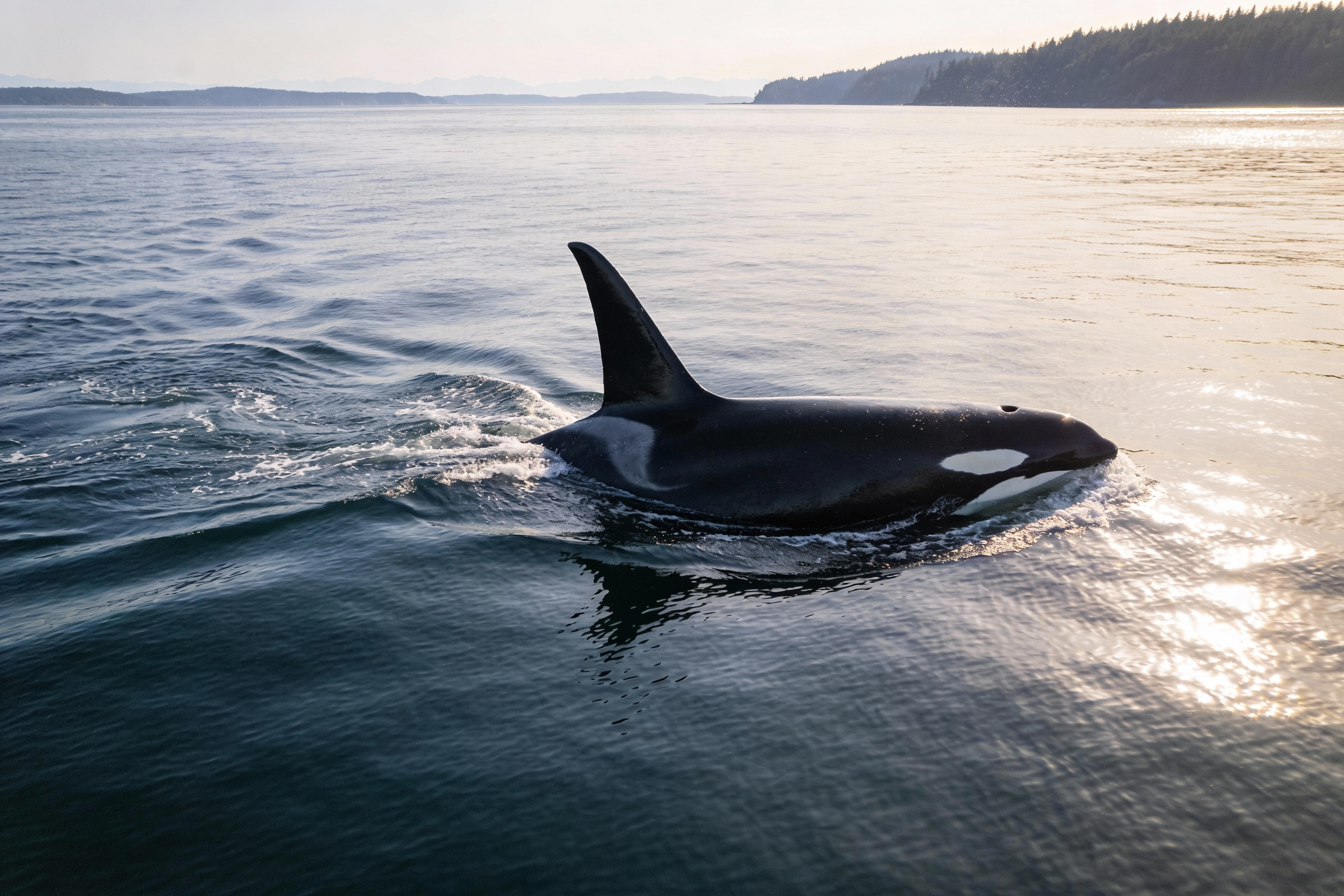
For a few weeks each spring, the coastline becomes one of the most densely populated wildlife environments anywhere in North America.
For photographers, this can mean days where wildlife encounters happen constantly.
Wildlife to Photograph During the Herring Spawn
Bald Eagles
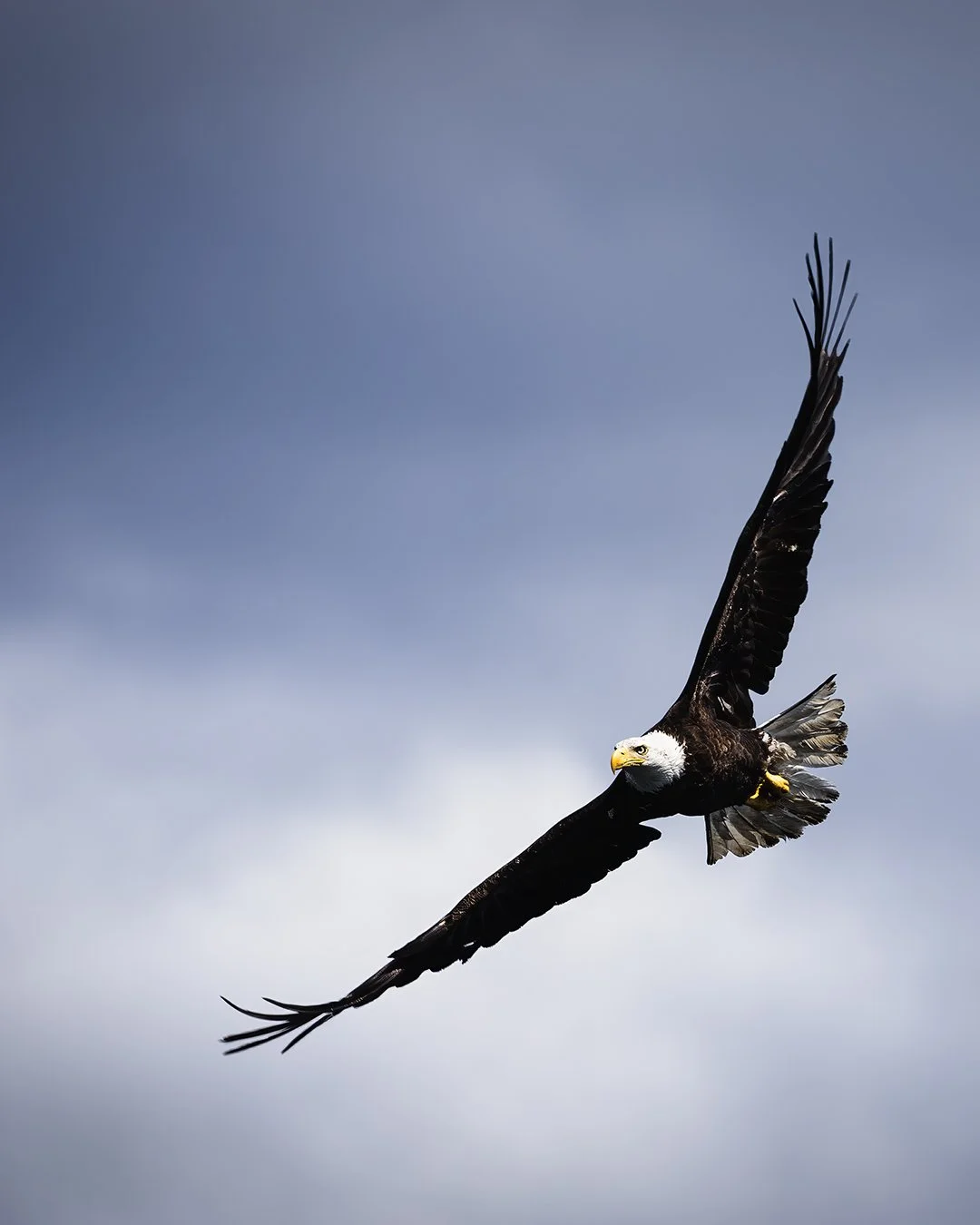
The herring spawn can attract staggering numbers of bald eagles.
Along parts of the coast, hundreds, of eagles gather to feed on herring and eggs along the shoreline.
This creates incredible photographic opportunities:
Eagles fighting mid-air over fish
Groups feeding on beaches
Flight photography in soft coastal light
Juvenile birds interacting and competing
Black Bears
Spring is also when black bears emerge from hibernation.
After months without food, they immediately begin searching for calories. Herring eggs are an easy and highly nutritious meal.
Bears will walk beaches flipping rocks, licking kelp, and feeding on eggs along the shoreline.
These early spring feeding opportunities can create some of the most intimate black bear photography conditions of the entire year.
The Second Great Wildlife Event: The Salmon Runs
If the herring spawn is the opening act, the salmon runs are the main event.
Every year from late summer into fall, Pacific salmon return from the ocean to the rivers where they were born.
These runs are among the most important ecological events in British Columbia.
Salmon bring ocean nutrients hundreds of kilometres inland, feeding countless species along the way.
For wildlife photographers, salmon runs mean one thing:
Bears. Wolves. Eagles. Everywhere.
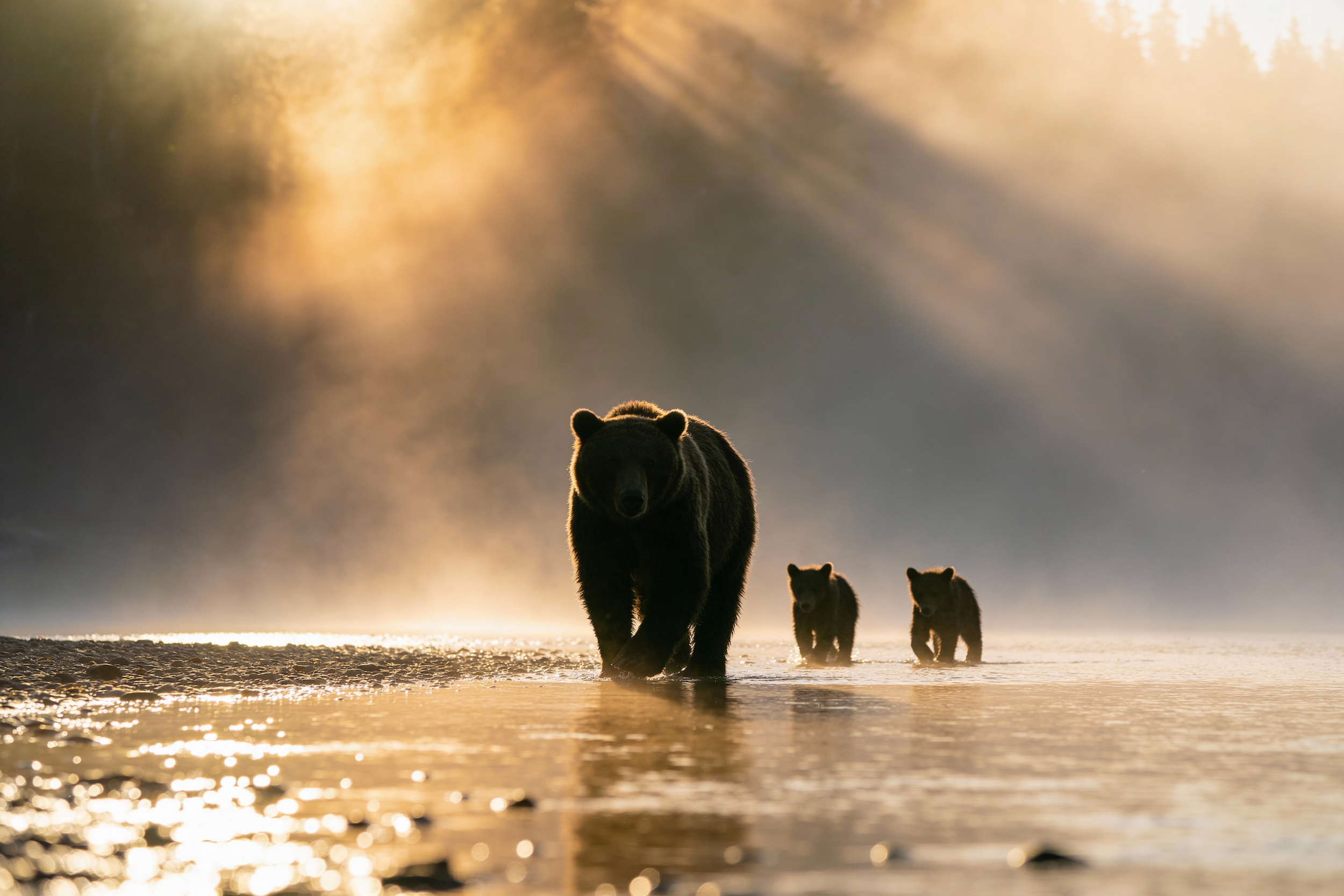
Photographing Bears During Salmon Runs
Salmon streams can become bear magnets.
When the runs are strong, bears may feed for 12–16 hours per day, moving up and down rivers catching fish.
This can create some of the most incredible wildlife photography opportunities anywhere in the world.
Photographic opportunities include:
Bears catching salmon mid-river
Bears feeding on riverbanks
Bears interacting with each other
Cubs learning to fish
Dominant bears defending prime fishing spots
Because bears return to productive fishing areas repeatedly, photographers can often anticipate behaviour and position themselves accordingly.
Three of the Best Wildlife Photography Locations in British Columbia
British Columbia is huge, and incredible wildlife exists in many regions.
But a few places stand out consistently for photographers.
These are three of my personal favourites.
1. Western Vancouver Island
The west coast of Vancouver Island is one of the most productive wildlife photography regions in Canada.
Here, ancient temperate rainforest meets the open Pacific Ocean, creating an incredibly rich ecosystem.
Wildlife here includes:
Black bears
Wolves
Bald eagles
Sea otters
Humpback whales
Grey whales
Sea lions
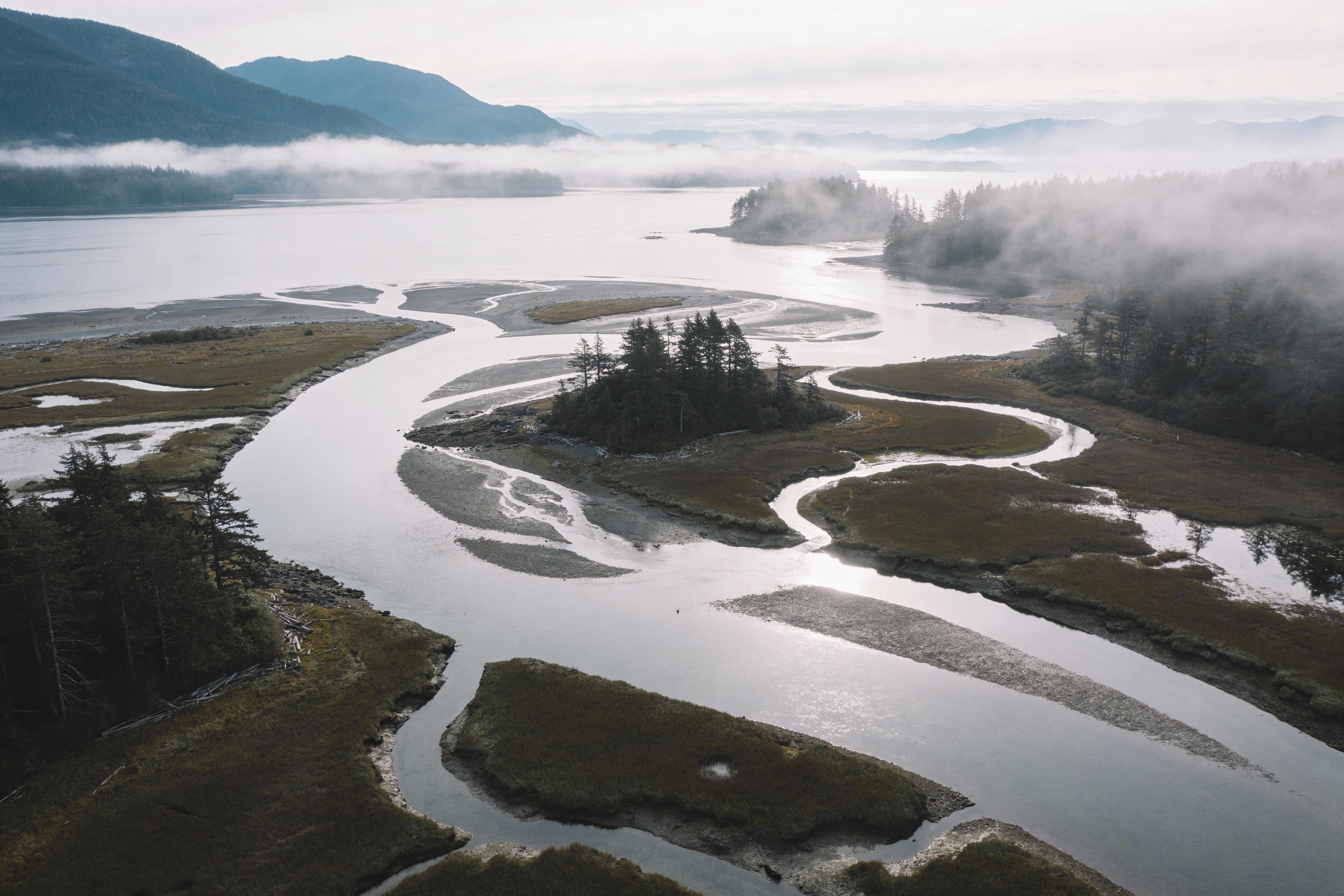
During the spring herring spawn, this region can become especially active.
Small bays and inlets fill with spawning fish, attracting birds and mammals in large numbers.
The variety of habitats also creates incredible photographic backdrops:
Rugged coastlines
Foggy beaches
Driftwood forests
Kelp beds
Ancient cedar forests
For photographers looking for diversity, from marine life to large mammals, few places rival this stretch of coastline.
2. The Great Bear Rainforest
The Great Bear Rainforest is one of the most legendary wildlife photography destinations on Earth.
Stretching along the central coast of British Columbia, this region is home to one of the largest intact temperate rainforests remaining anywhere in the world.
It is also home to extraordinary wildlife.
Photographers come here hoping to see:
Coastal wolves
Black bears
Grizzly bears
Bald eagles
The rare white Spirit Bear
During salmon season, bears gather along rivers throughout the rainforest to feed.
Some locations can host multiple bears simultaneously, creating opportunities for dramatic behavioural photography.
The landscape itself adds another layer of beauty:
Moss-covered forests
Mist rising from rivers
Massive old-growth trees
Remote fjords and inlets
Few places combine wilderness, wildlife density, and dramatic scenery like the Great Bear Rainforest.

3. Chilko River
Interior British Columbia offers a very different wildlife photography experience.
One of the most exciting locations is the Chilko River, which hosts one of the largest salmon runs in the province.
During peak salmon season, the river can become a hotspot for wildlife activity.
Grizzly bears arrive in large numbers to feed on the returning fish.
For photographers, this can create unforgettable scenes:
Bears chasing salmon through shallow water
Multiple bears feeding along gravel bars
Dominant bears controlling the best fishing spots
Cubs learning survival skills
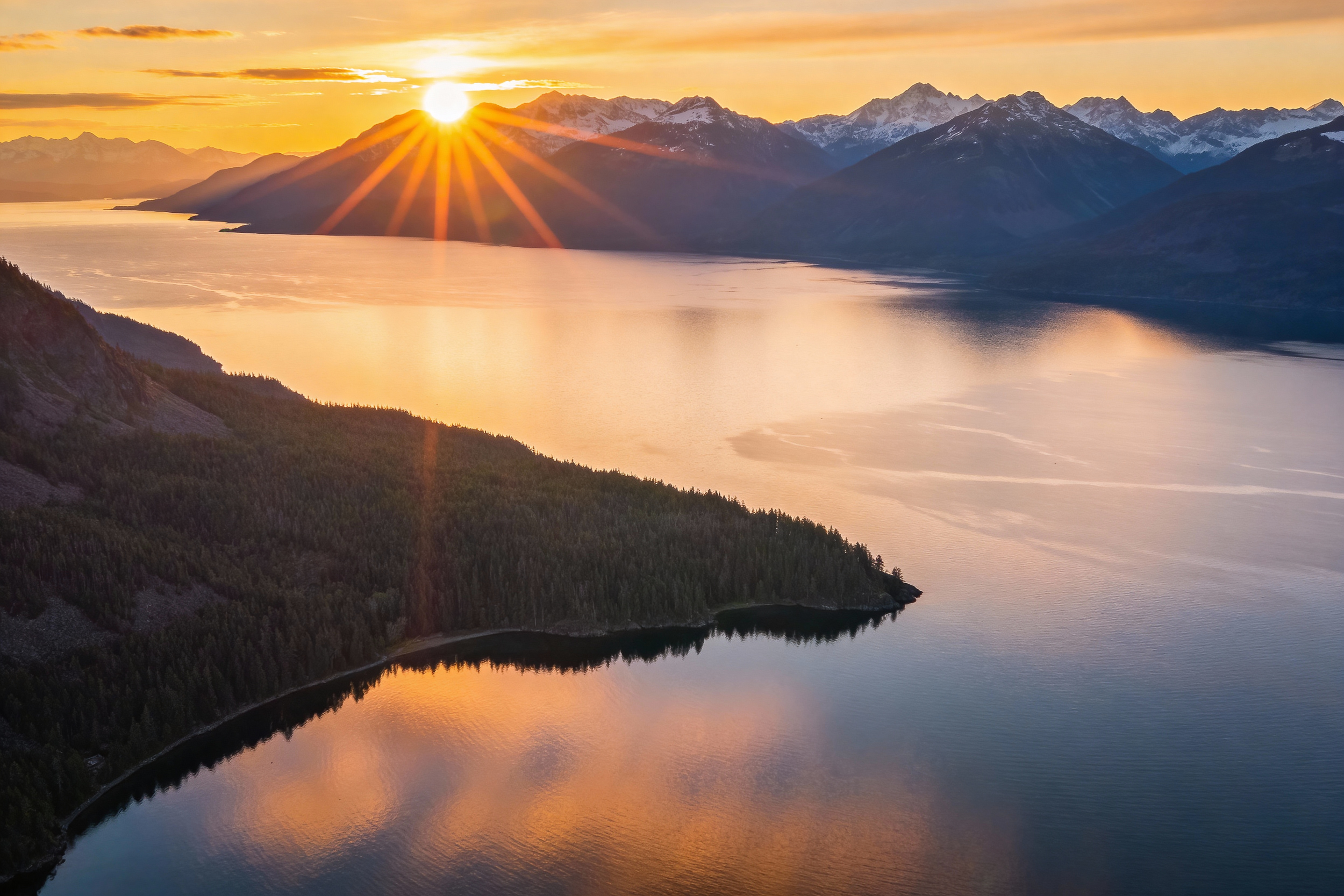
The Chilko region also offers dramatic mountain scenery, wide river valleys, and expansive wilderness landscapes that add scale and context to wildlife images.
Field Techniques for Wildlife Photographers
Finding wildlife is only part of the equation.
How you behave in the field can determine whether animals remain relaxed or disappear entirely.
Some of the most important wildlife photography skills have nothing to do with cameras.
Stay in One Spot Longer Than You Think
One of the biggest mistakes photographers make is moving too often.
When photographers constantly reposition, they push wildlife out of an area.
Animals notice movement far more than they notice stillness.
Instead, try this approach:
Find a promising location
Set up quietly
Stay still for extended periods
Wildlife often reappears once they realize nothing is chasing them.
Many of my best wildlife encounters have happened after sitting quietly for an hour or more.
Patience is one of the most powerful tools in wildlife photography.
Use the Longest Lens You Can
Long lenses serve two critical purposes:
They allow tighter framing of distant animals
They keep photographers farther away from wildlife
Staying at a respectful distance is essential for both ethics and behaviour.
Animals that feel pressured will change their behaviour, or leave entirely.
When animals behave naturally, the photographs become far more powerful.
Anticipate Behaviour Instead of Reacting
Great wildlife photography often comes from anticipating behaviour rather than reacting to it.
For example:
Bears tend to follow predictable fishing paths along rivers
Eagles often take off into the wind
Wolves frequently travel established routes
If you understand these patterns, you can position yourself in advance.
This transforms photography from chasing wildlife to letting wildlife come to you.
Using Seasonal Behaviour to Your Advantage
Wildlife photography becomes dramatically easier when you understand seasonal behaviour.
Animals become predictable during key periods of the year.
Mating Seasons
Mating season can dramatically increase wildlife visibility.
During these periods:
Animals move more frequently
Territories are defended
Social interactions increase
For example, during bear mating season in spring and early summer, bears often travel long distances searching for mates.
This can lead to more encounters, and fascinating behavioural photography.
Ethics: The Most Important Rule
The best wildlife photographers understand that the animal always comes first.
If an animal changes its behaviour because of your presence, you are too close.
Respecting wildlife ensures:
Natural behaviour
Better photographs
Long-term conservation
And ultimately, protecting these ecosystems ensures photographers will still have wildlife to photograph in the future.
Why British Columbia Is One of the Best Places on Earth for Wildlife Photography
Very few places in the world still contain ecosystems where:
Salmon runs remain massive
Predator populations remain healthy
Forests remain largely intact
British Columbia still holds many of these rare ingredients.
When the timing is right, during herring spawn or salmon runs, the sheer density of wildlife can be astonishing.
For wildlife photographers willing to learn these natural cycles, the province offers opportunities that rival anywhere on Earth.
Bringing the Wild Into Your Home
Spending time in these places changes you.
Watching wolves move silently along a misty coastline. Seeing a bear explode through a river chasing salmon. Standing beneath a sky full of eagles during the herring spawn.
Moments like these are impossible to forget.
Many of the photographs available on my fine art prints page come directly from these ecosystems and seasonal events.
If you’d like to bring a piece of British Columbia’s wild landscapes and wildlife into your home, you can explore the collection of available prints here.
Each image represents time spent in the field, patience, and deep respect for the wildlife that makes this province one of the most extraordinary places on Earth.
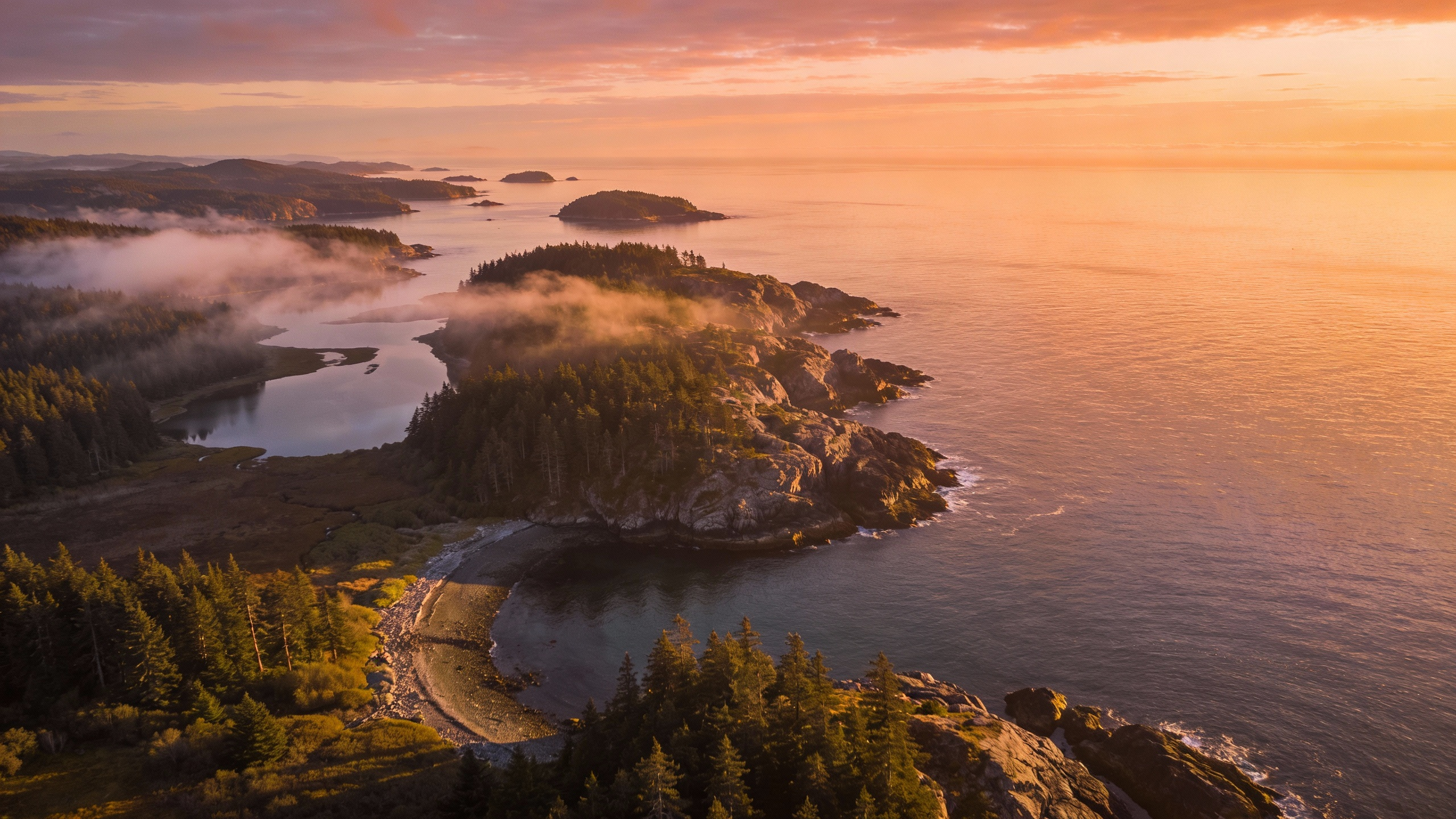
Ma’quin (Brooks Peninsula, Vancouver island)
I enjoy writing as much as I enjoy taking photos, so today’s writing will be a little different. Who’s perspective is this from?
I was here before your maps had names.
Some call it Ma’quin. Others call it Brooks Peninsula. I know it as the place where the land refused to leave.
When the ice came thick and grinding, swallowing valleys and flattening forests, much of the coast bowed beneath it. But this spine of rock endured. A refugium. A word you use now to describe what we simply survived. While glaciers pressed and scraped the mainland, this peninsula stood apart, a weathered knuckle of the continent holding fast against the cold.
From above, I watch the morning mist unravel itself from the coves. The sea breathes gold at first light, and the old-growth clings to granite like memory. These trees are not just trees, they are descendants of persistence. Seeds carried by wind and wing, waiting out centuries of ice. Moss and lichen that never forgot how to grow here. Life that did not retreat.
Refugium means sanctuary. It means continuity.
Everything here is connected by survival, rock, root, fur, fin.
I ride the thermals rising from sunlit cliffs and think of how narrow the margin once was. How a few degrees colder, a few meters deeper, and this stronghold might have vanished beneath ice like so much else. Instead, Ma’quin endured, and because it endured, forests returned to the coast. Because it endured, life radiated outward again when the glaciers loosened their grip.
I have watched generations come and go, wolves pacing beaches, bears turning stones for crabs, humans arriving in cedar canoes and later in vessels of steel. Some move through this place with reverence. Others with hunger. The peninsula does not judge. It simply remains, but remaining is not the same as invincible.
Refugia are not just relics of the past. They are promises about the future.
As the climate shifts again, as waters warm and winds grow uncertain, places like this matter more than ever. They hold genetic memory.
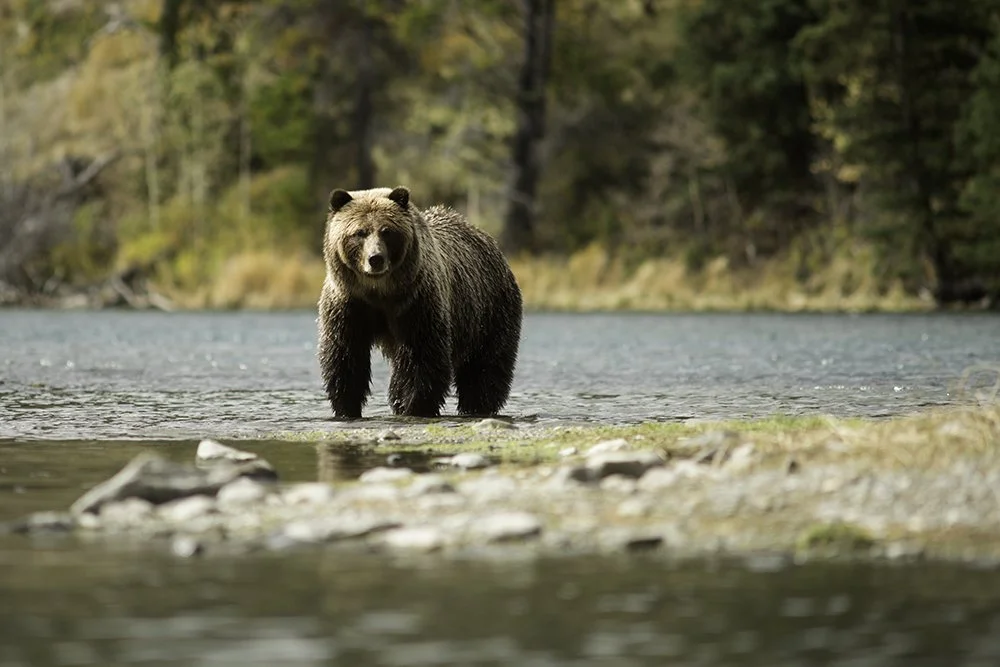
A Close Call
I had just finished one of those unforgettable days on the river. From morning to late afternoon I photographed grizzlies moving through the salmon run , at least twenty to twenty-five different bears cycling through. Big boars, subadults, mothers with cubs. It was wild in every sense.
To get back to the lodge, I had to walk about two kilometers down an old wagon road through the forest. That stretch is loaded with bears. They fish the river, then carry salmon into the trees to eat in peace. So as I walked, I made noise, calm, steady letting anything nearby know I was there.
Up ahead, I spotted a large grizzly sitting on the side of the road. I called out, “Hey bear.” After a moment, it moved off into the bush. Perfect.
Ten seconds later, I heard what sounded like a freight train crashing through the trees toward me. Adrenaline hit instantly. Bear spray was already in my hand.
When the bear exploded out of the brush, I realized it wasn’t the one I’d just seen. It was a fierce mother I had been photographing earlier. She charged in fast and stopped just a few meters away, ripping at the ground, huffing, clearly agitated.
The first bear had likely crossed her path. There was an altercation. She bolted with her cub, and I was standing directly in her escape route.
Not a good place to be.
I didn’t run. I didn’t spray. I slowly backed up, speaking calmly, creating space inch by inch.
After a few long seconds, she chose not to escalate. Once enough distance opened up, she turned and disappeared back into the forest with her cub.
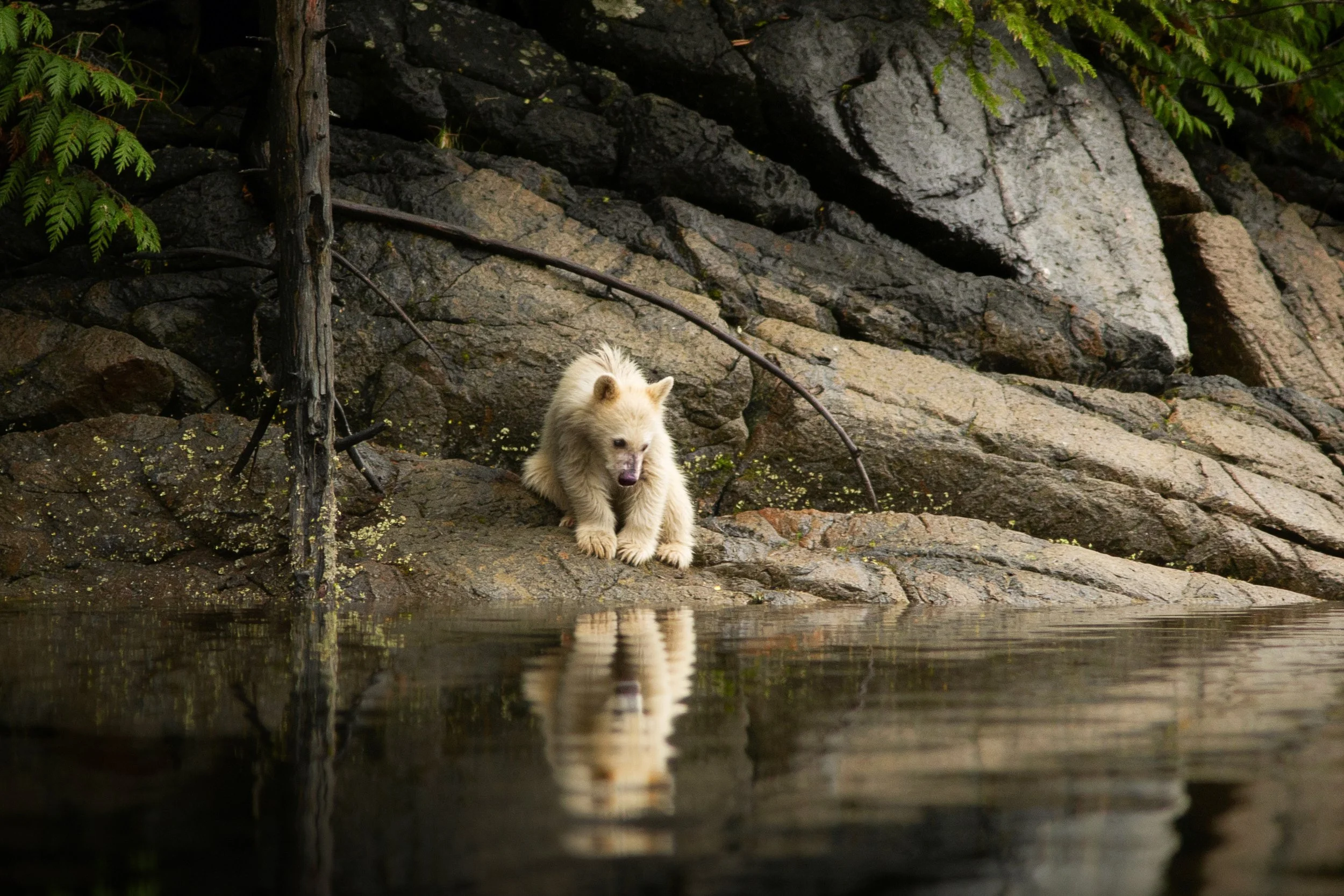
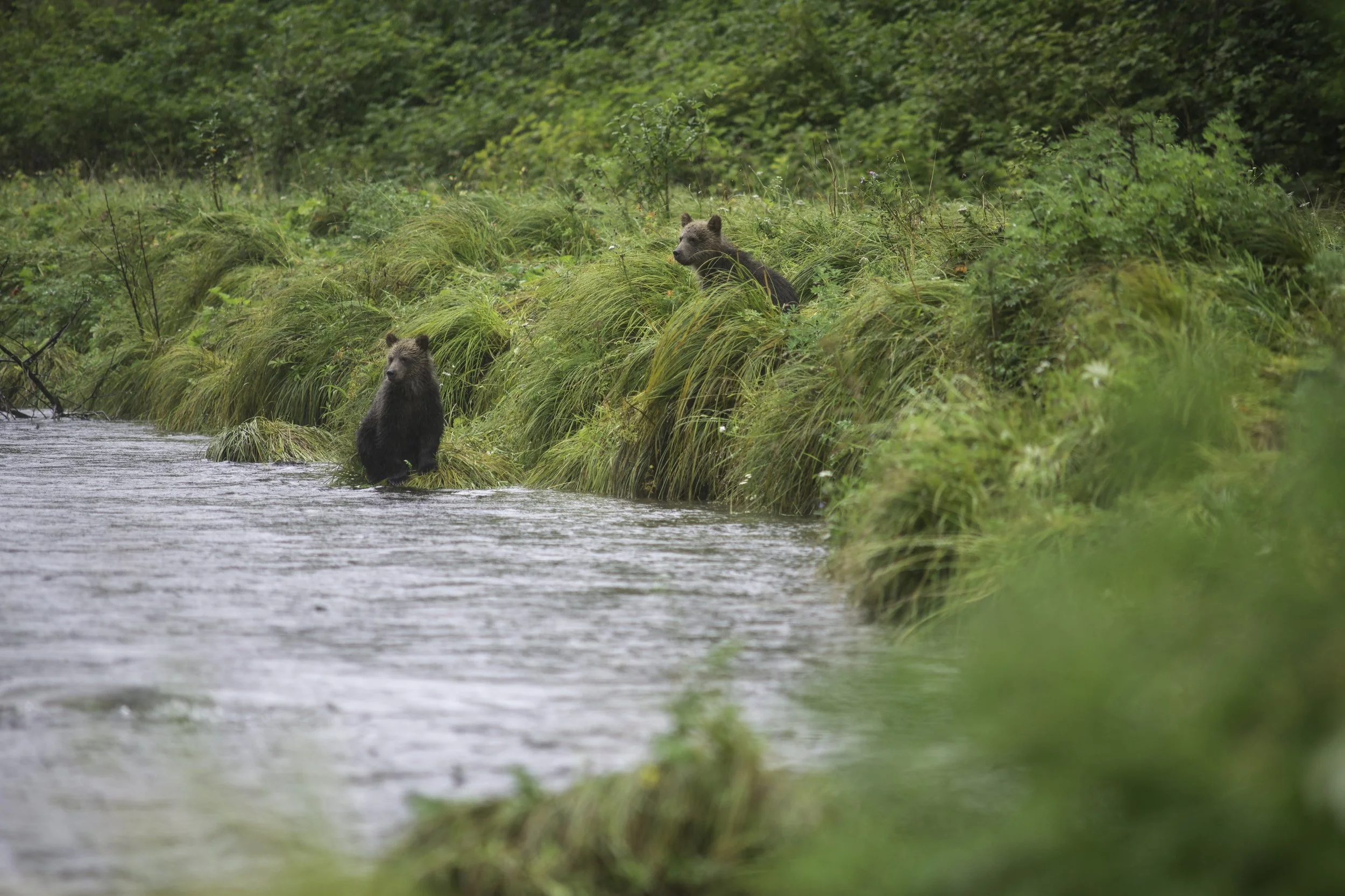
Too Young To Be Alone
It may not look like it at first glance, but this is a cub of the year, born only eight months before this photograph was made.
They had already lost their mother.
Too young to be alone, they were left to interpret the river, the forest, and the silence on their own.
We had never set foot in this river system before. It was meant to be a scouting mission, a hopeful search for a spirit bear in one of the few places they are most concentrated. Instead, we were given something far rarer: a solitary cub stepping cautiously through a world that had already asked too much of it.
For a few brief minutes, I was alone with this young bear, just the two of us, separated by water and circumstance. I took a few images as the cub came to drink. Eventually, it walked off into the bush, and I raced back to the group to warn them what was coming our way.
When the cub stepped out and walked toward us, close enough that the moment felt suspended in time, we asked everyone not to raise their cameras. This cub was clearly alone and lost.
Any flashes or sudden movements could have pushed it away. So we stayed completely still. And it chose to come right up to us, sitting only a few feet away.
It’s a moment none of us have as proof, but one permanently carved into our memories.
Moments later, the cub drifted back into the forest and was never seen again
I made this image from a rocking zodiac with a manual lens. The light was dim. The movement relentless. When I reviewed the frame, it felt unusable, completely out of focus. I archived it and moved on.
Nine years later, new technology allowed me to recover what I once thought was lost. What was blurred is now visible. What felt fleeting now holds form.
This photograph has never been published before.
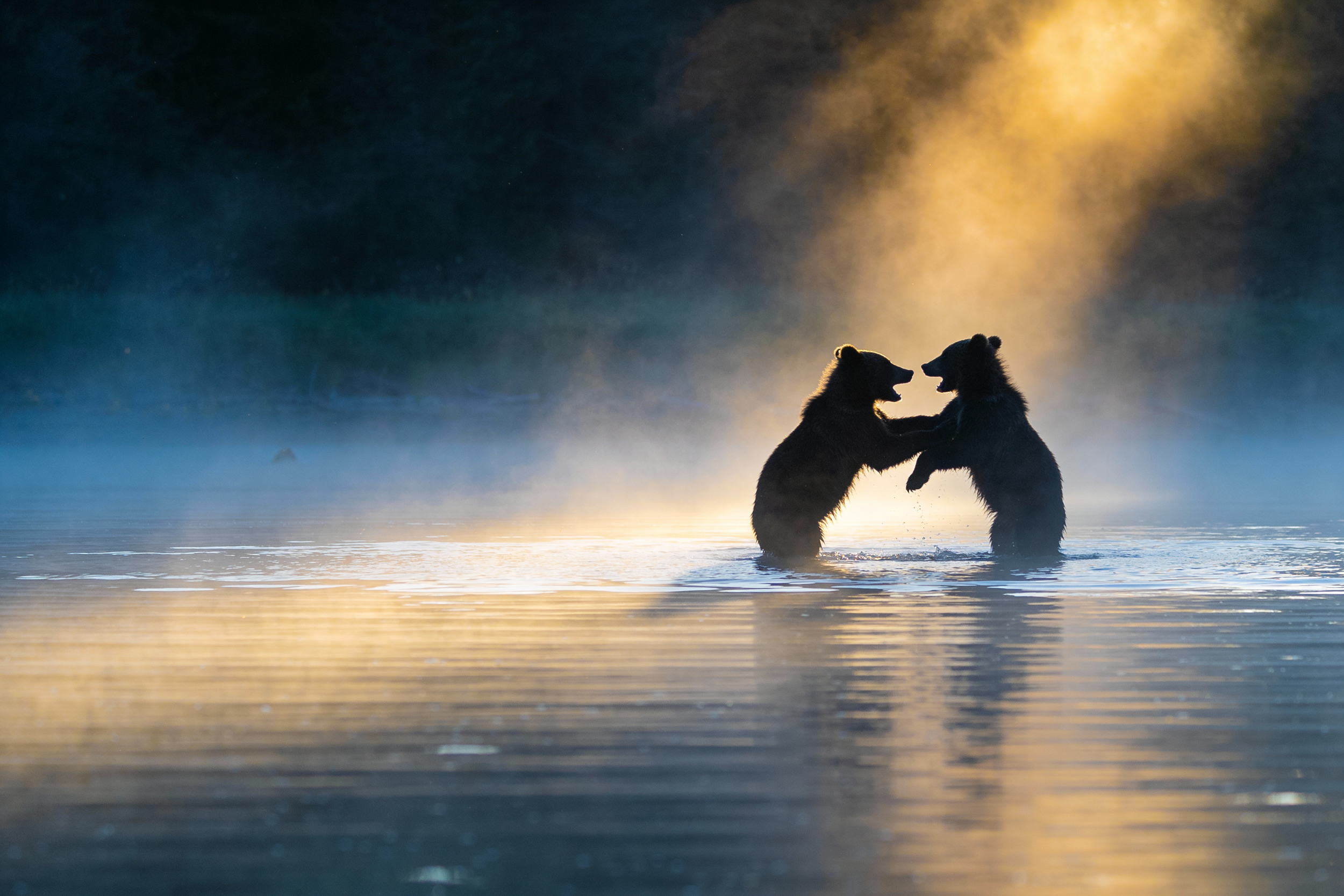
The Space Between Light and Loss
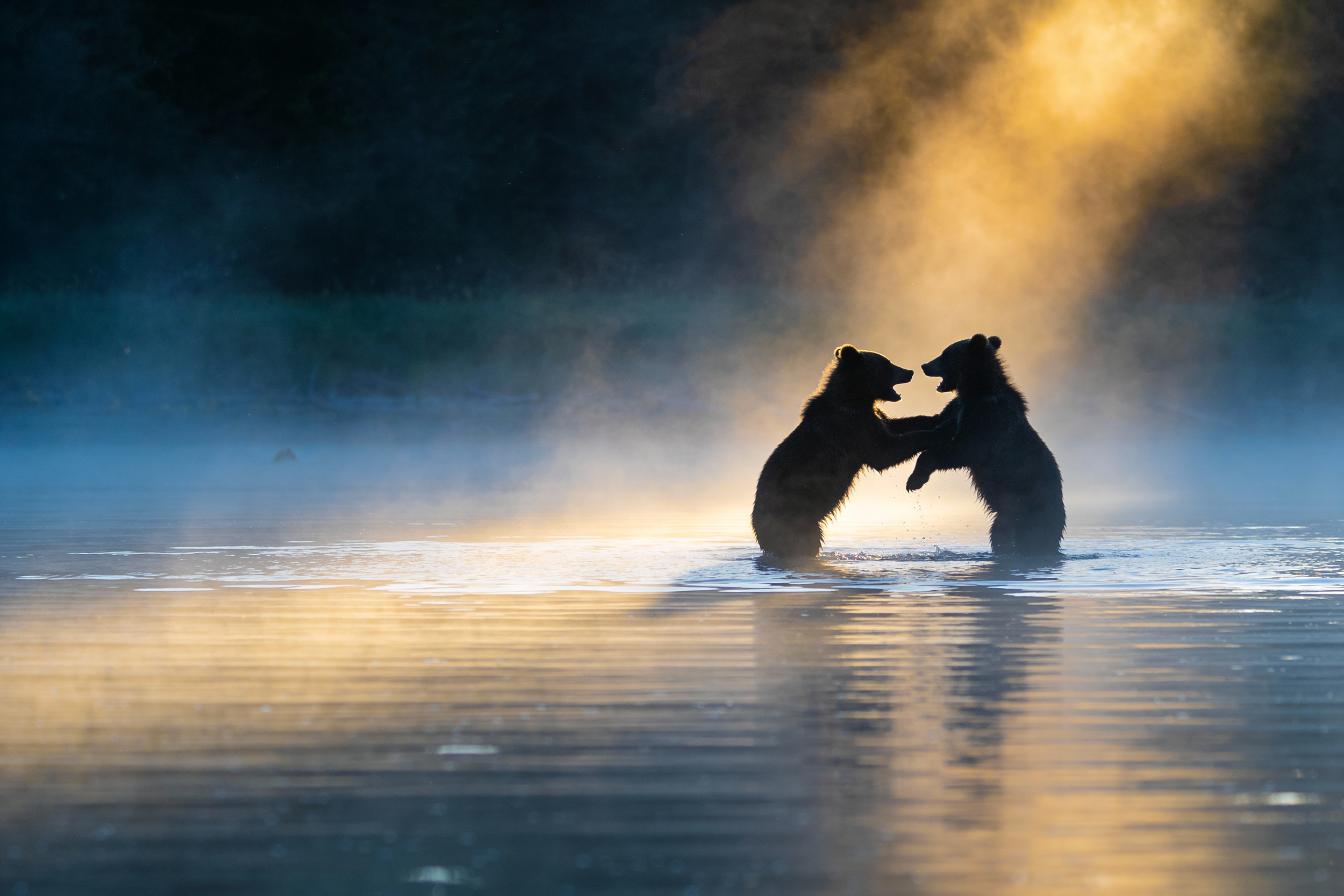
I took this photograph in 2017, just after the first light of dawn broke the horizon.
I was standing on the river with a small group, watching two grizzly cubs play in the golden light. They wrestled and tumbled along the bank, completely absorbed in the moment. This is how cubs learn, through play, through testing their strength and balance.
Their mother was nearby, fishing for salmon. She was a dominant bear, experienced and powerful. For a brief moment, she focused on feeding and allowed a little distance to open between her and her cubs.
A large boar, one I had never seen on that river before, came through and found them. She was close, but not close enough to get to them in time.
Males will kill cubs to put females back into estrus. When a female is raising cubs, she will go roughly 3 years before mating again.
This image is the last photograph of these cubs alive.
What stays with me is the contrast from moments before and moments after. Something so beautiful can exist right beside something so unforgiving. The light, the innocence, the stillness of that morning, and then the roaring, chaos and finally silence.
Nature isn’t gentle, and it isn’t cruel. It simply is.
In wildlife photography, you eventually witness every side of the wild, from its most tender moments to its most brutal truths.
Why Good Light Is The Most Important Aspect Of Photography
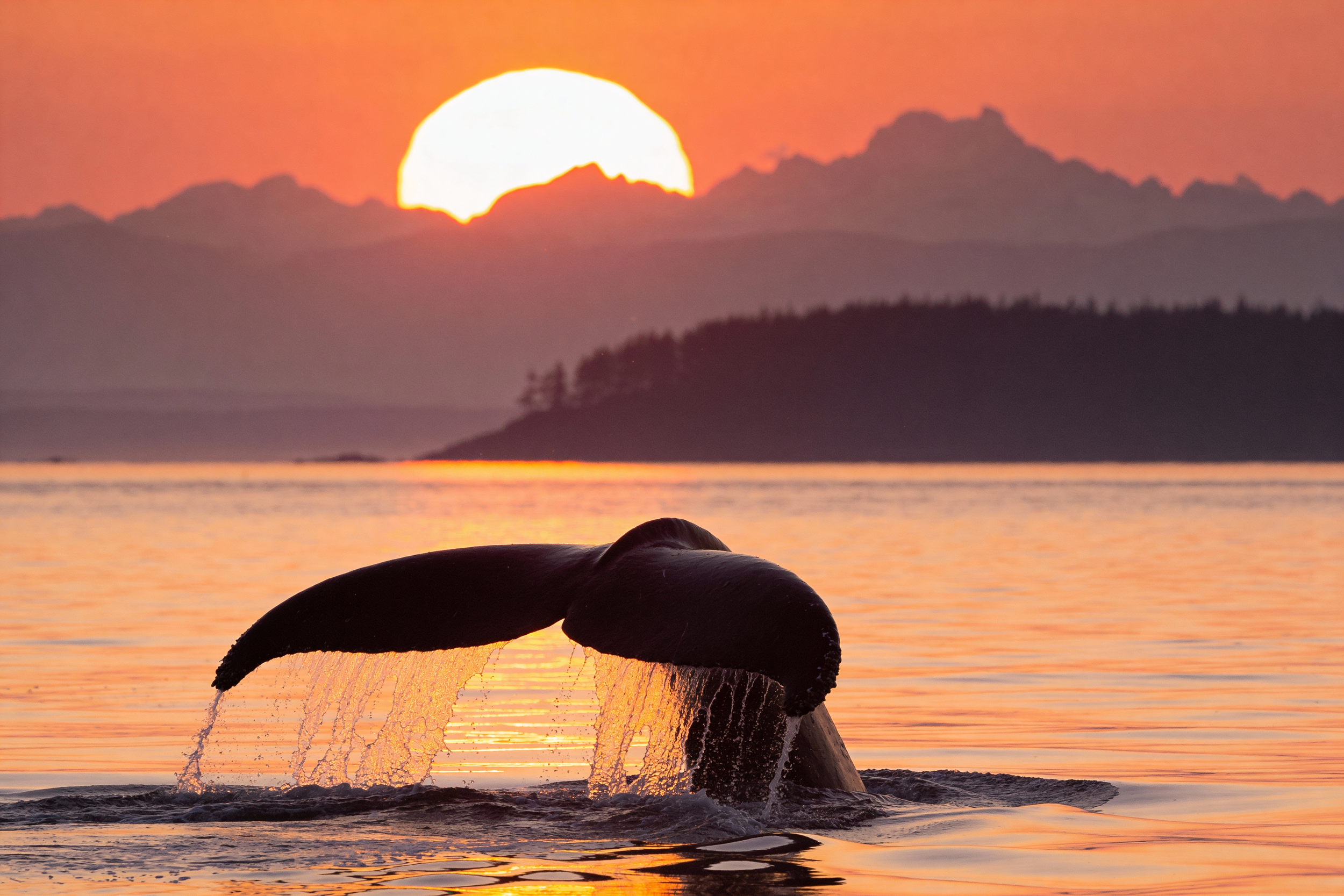
If I had to strip photography down to one thing, it wouldn’t be sharpness, composition, gear, or even the subject.
It would be light.
Every strong photograph you’ve ever stopped scrolling for had one thing in common: the light was doing the heavy lifting. Not because it was flashy or dramatic, but because it made sense. It shaped the subject. It created mood. It told you how to feel before your brain had time to analyze what you were looking at.
Good light turns an ordinary moment into something worth remembering. Bad light turns a rare moment into a missed opportunity.
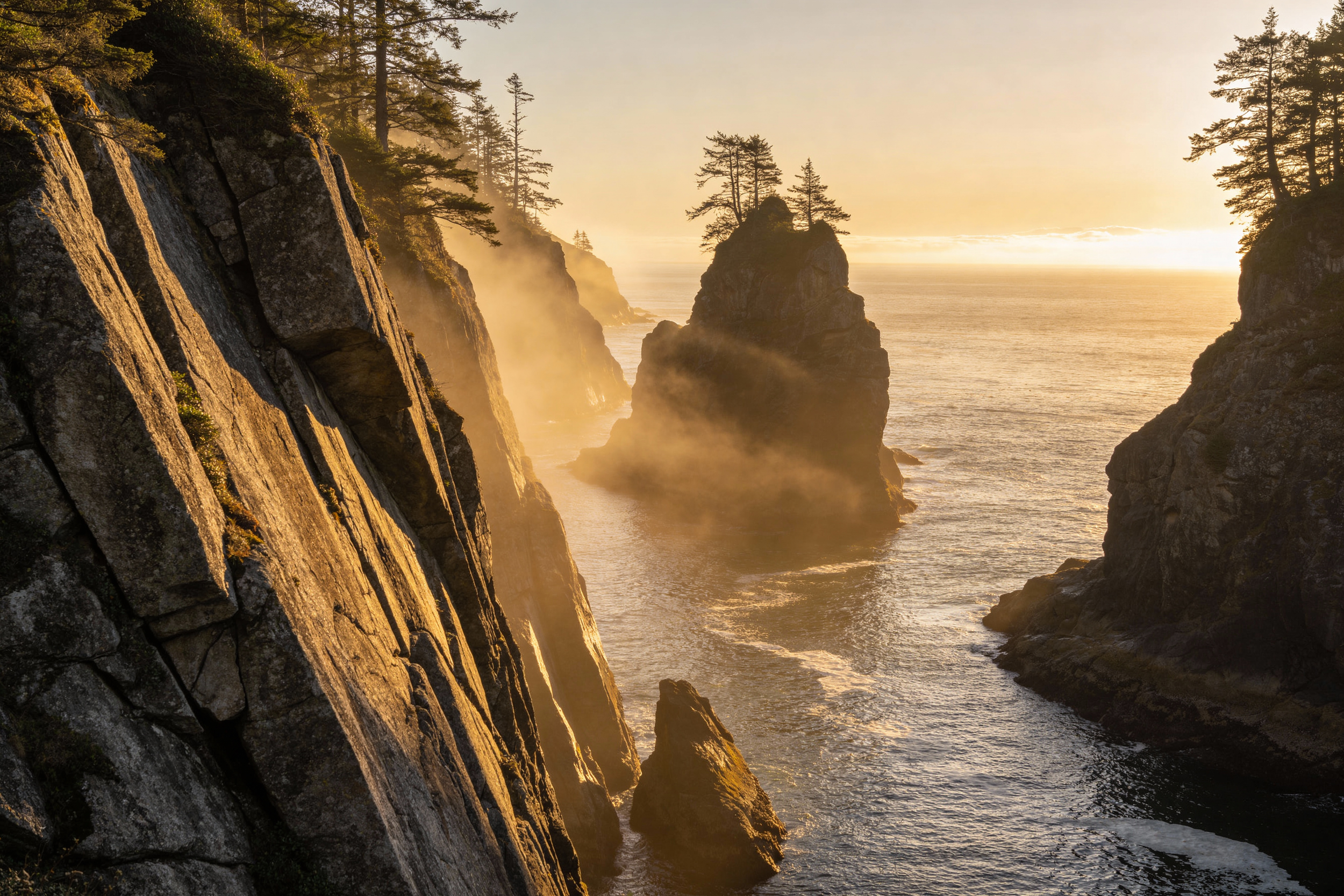
Light Is the Difference Between Seeing and Feeling
You can photograph the most incredible wildlife subject on the planet, an eagle, a bear, a whale, but if the light is flat, harsh, or directionless, the image will feel empty. Technically fine, emotionally forgettable.
Good light adds depth.
It creates separation.
It gives shape, texture, and intention.
Soft side light reveals form. Backlight adds atmosphere and motion. Low-angle light wraps around a subject and gives it presence. These aren’t stylistic choices, they’re emotional ones.
Light decides whether a photo feels alive or dead on arrival.
Light Creates Predictability
This is something wildlife photography teaches you fast: animals don’t move randomly. Light doesn’t either.
Good photographers aren’t chasing animals, they’re positioning themselves where light and behavior intersect. When you understand how light moves through a landscape, you can start to predict where moments will happen before they do.
Where the sun will rise.
Where it will skim the water.
Where it will backlight mist, breath, feathers, or spray.
Gear Doesn’t Fix Bad Light
This one stings, but it’s true.
A better camera won’t save harsh midday sun.
A sharper lens won’t add depth to flat light.
Higher megapixels won’t create mood.
Some of the strongest images I’ve ever made were with modest gear, because the light was right. Light is the foundation. Everything else is secondary.
Timing Beats Talent
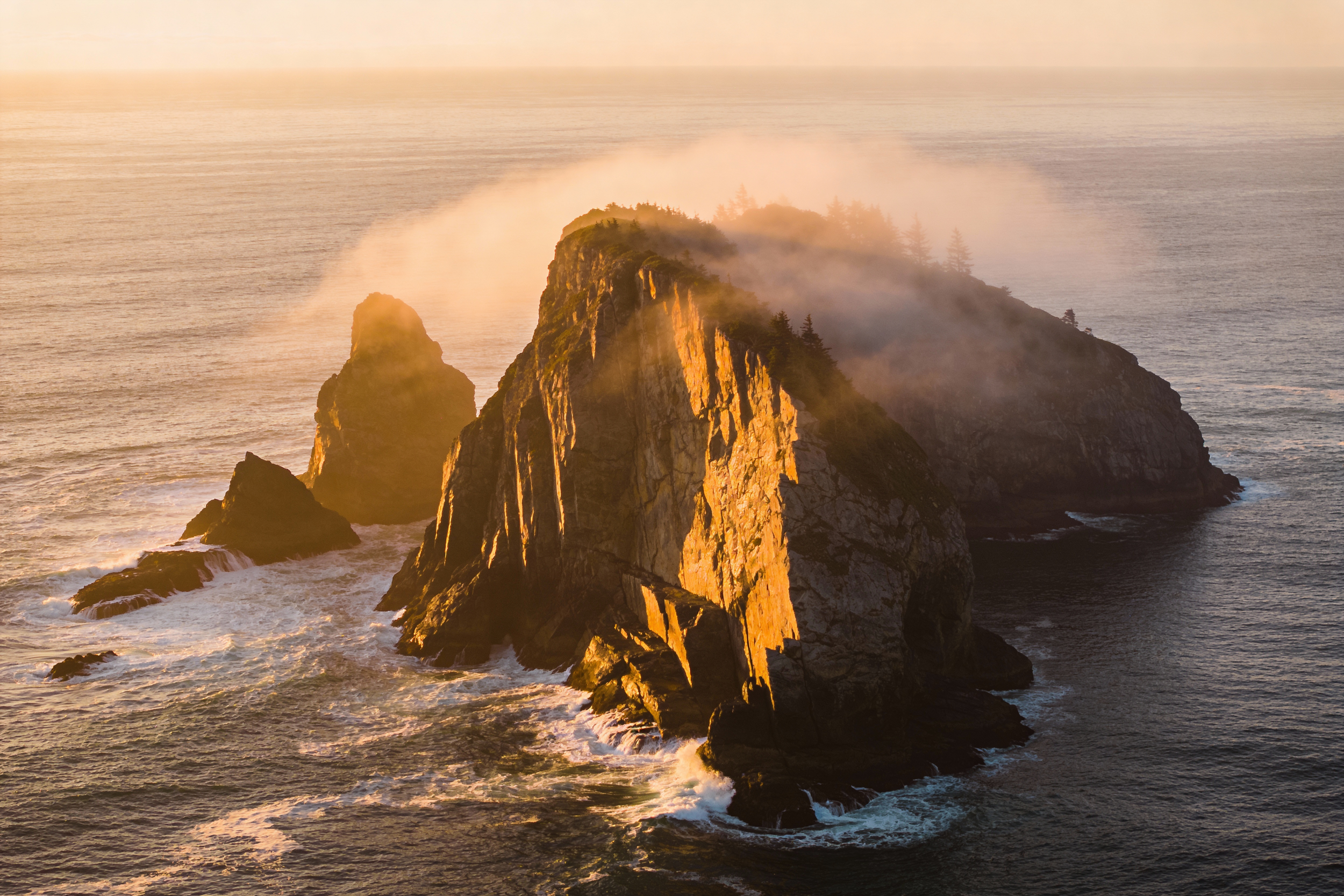
You don’t need to be more creative. You need to be more patient.
Good light is fleeting. It shows up quietly, hangs around briefly, and disappears without apology. The photographers who consistently create strong work aren’t necessarily more talented, they’re more willing to wait, return, and walk away empty-handed until conditions align.
They understand that forcing a photo rarely works.
Letting light lead usually does.
Why This Matters
We live in a time of constant images. Endless content. Infinite scroll.
Good light is one of the few things that still stops people.
It cuts through noise.
It slows the viewer down.
It gives an image weight.
If you want your photographs to last, to feel timeless rather than trendy, start by prioritizing light over everything else. Subjects will come and go. Locations will change. Gear will be replaced.
When Light is great, everything else becomes easier.

More Than a Face: Why Environmental Portraits Matter for Wildlife Conservation
In wildlife photography, intimacy is often equated with impact. A tight frame, a sharp eye, a detailed face—these are the images that dominate social media and covers alike. But in an era of accelerating habitat loss and environmental change, photographs that isolate animals from their surroundings risk telling an incomplete story. Environmental portraits, which place wildlife within the landscapes they depend on, offer a more powerful and honest tool for conservation and storytelling.
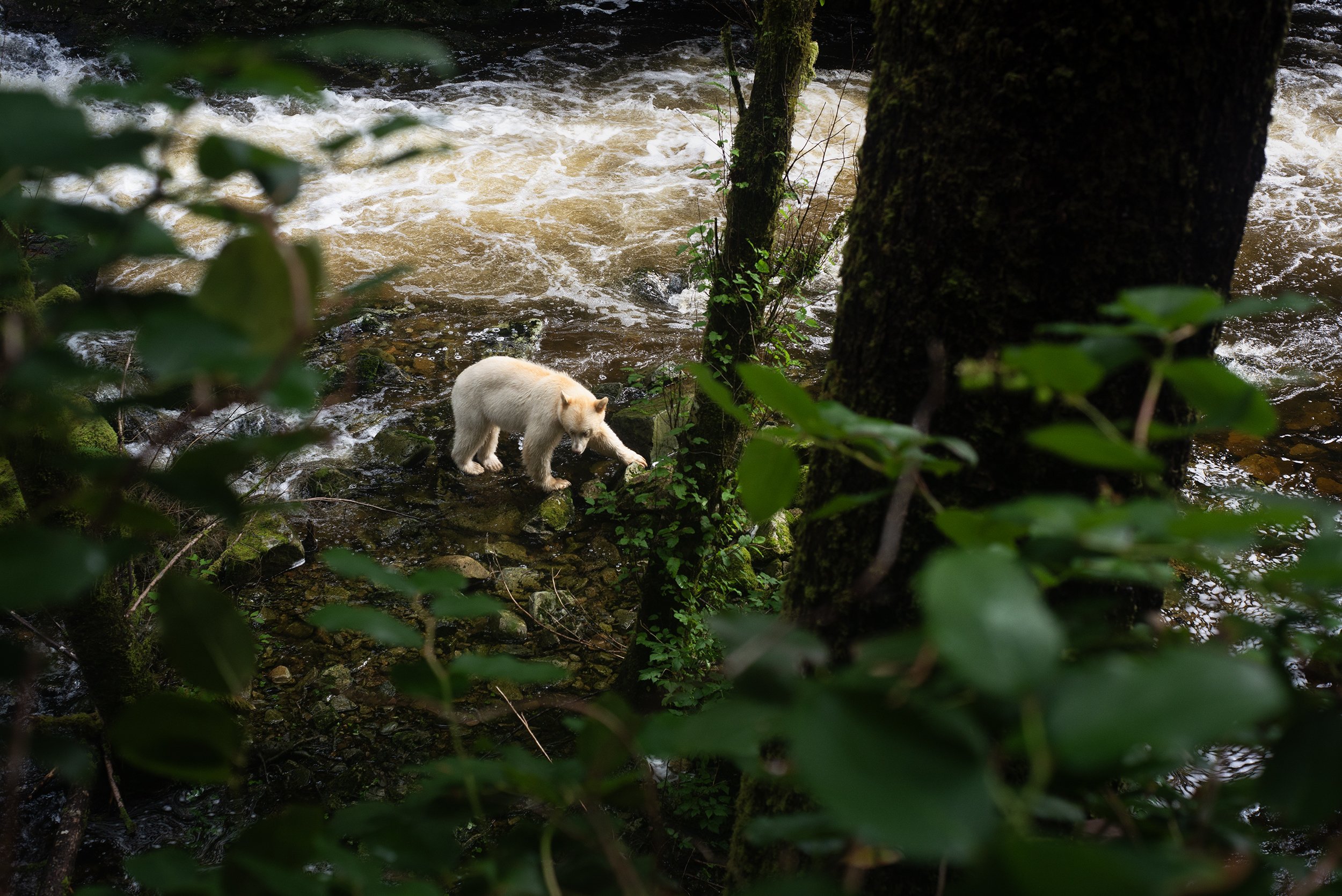
A spirit bear moves carefully through a shallow rainforest stream, its pale coat catching what little light filters through the canopy. The bear is not centered, nor dominant in the frame. It is partially obscured by leaves and tree trunks, surrounded by moving water, moss-covered stones, and dense forest growth. The photograph is not about the bear alone, but about the fragile conditions that allow it to exist at all: intact watersheds, healthy salmon runs, and old-growth forests that regulate temperature and flow. Remove the environment, and the image becomes symbolic. Include it, and the photograph becomes specific, rooted in place, and therefore rooted in responsibility.

Environmental portraits force both photographer and viewer to acknowledge scale. In the dense rainforest, a spirit bear clings to the trunk of a towering tree, partially obscured by moss and shadow. The forest overwhelms the frame, dwarfing the animal within it. This is not a portrait of dominance or charisma. It is a portrait of dependence and survival. The bear’s survival is inseparable from old-growth structure, seasonal food cycles, and the continuity of an ecosystem that is increasingly fragmented.
That same sense of scale emerges even more starkly in mountainous terrain. A spirit bear navigates a sheer granite slope, its pale form contrasted against dark rock, while her two cubs of the year, follow clumsily on the same narrow ledge above. Shot wide, the image emphasizes exposure and verticality, forcing the viewer to register risk, terrain, and movement rather than fur or facial detail. The bears occupy only a small portion of the frame, their path dictated entirely by the fractured cliff face beneath them. This is not an image about rarity or spectacle, but about access, to travel corridors, seasonal resources, and intact landscapes that still allow such routes to exist. A tight portrait would erase the difficulty of this passage. The environmental portrait insists on it.

Up-close wildlife portraits can be emotionally compelling, but they often imply a false sense of abundance and security. An animal presented without context appears timeless and resilient. Environmental portraits challenge that illusion. They show how narrowly balanced these lives truly are, and how much is at stake when landscapes are altered or lost.
From a conservation perspective, these images do more than document species. They document relationships. They show animals not as isolated icons, but as participants in complex systems that require space, continuity, and protection. For editors, conservationists, and audiences alike, this distinction matters. It shifts the narrative from “look at this animal” to “look at what this animal needs.”
Environmental portraits do not ask viewers to admire wildlife from a distance. They ask viewers to consider the land and water that sustain it. This distinction matters even more for species like the spirit bear, one of the rarest bears on Earth, whose survival is tied to a very specific place and set of conditions. To photograph a spirit bear without its environment is to strip away the very reason it exists. Environmental portraits make that connection unavoidable. They remind us that rarity is not just a matter of genetics or numbers, but of habitat, continuity, and restraint. In doing so, these images move beyond admiration and toward responsibility, offering a quieter but more enduring form of advocacy, one rooted in place, and in stewardship.
Sharpening the Past
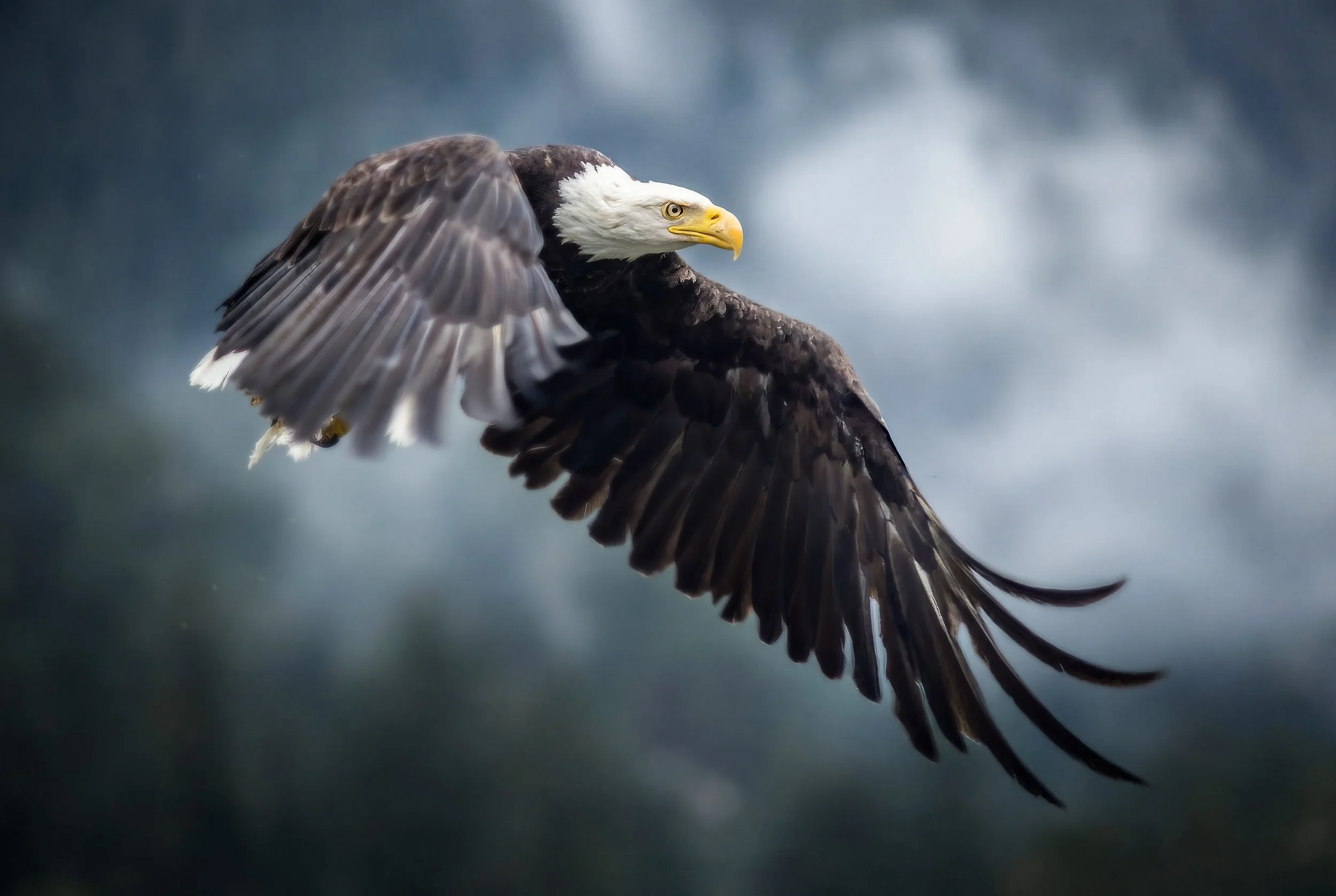
I still remember the frustration of reviewing certain frames in the field, images that should have been career-defining, reduced to soft, unusable files by a fraction of missed focus, and the limitations of human reaction under pressure. For years, those photographs lived in digital limbo: encounters that mattered deeply, but could never be shared. Now, with the arrival of AI-driven sharpening and refocusing tools, some of those “lost” images have been pulled back from the dead, suddenly crisp enough to command attention. The thrill is undeniable. But so is the discomfort. When technology resurrects moments I once accepted as failures, it forces a difficult question at the heart of wildlife photography: are we recovering reality, or quietly rewriting it?
Artificial intelligence is forcefully rewriting the boundaries of our world. Within wildlife photography specifically, tools that can sharpen blurred images, reduce noise beyond traditional limits, or even reconstruct missed focus are now capable of resurrecting photographs once considered unusable. For a discipline built on patience, fieldcraft, and restraint, the question is unavoidable: when we use AI to “save” an image, are we restoring reality or rewriting it?
At its best, AI offers something familiar. Photographers have always worked to overcome technical limitations. Darkroom dodging, burning, and contrast control were once controversial, yet are now accepted as part of the photographic process. Modern noise reduction and sharpening software already makes interpretive decisions on our behalf. AI-powered enhancement is, in many ways, an extension of that trajectory.
But wildlife photography is not just about aesthetics. It carries an implicit contract with the viewer: that what is shown is a truthful representation of a real moment in the natural world. This is where AI introduces unease. When software invents feather detail, refines eye sharpness, or reconstructs edges that were never resolved by the lens, the image begins to drift from documentation toward illustration.
The ethical line is not defined by whether AI is used, but by how and why. Using AI to reduce motion blur caused by low light or to clarify an image degraded by sensor noise can be seen as recovering information already present but obscured. However, when algorithms extrapolate missing data, guessing what should have been there rather than revealing what was, the photographer becomes a co-author with the machine. The resulting image may feel authentic, but its fidelity is no longer verifiable.
This distinction matters most in wildlife photography because rarity carries significant weight. Images of elusive species, unusual behavior, or once-in-a-lifetime encounters often shape public perception, conservation narratives, and scientific interest. An AI-enhanced image that subtly alters posture, expression, or environmental detail risks misleading audiences, even if unintentionally. The more compelling the image, the greater the responsibility.
Where, then, do we stand?
A growing consensus among ethical wildlife photographers is transparency. AI can be a valid tool when its role is disclosed, particularly in editorial or fine art contexts where storytelling and interpretation are expected. Problems arise when AI reconstruction is presented as straight photography, especially in competitions, conservation campaigns, or documentary work where accuracy is foundational.
There is also a deeper concern: reliance. If AI becomes a safety net for missed focus or rushed technique, it risks eroding the fieldcraft that defines wildlife photography in the first place. The discipline has always rewarded preparation, understanding of animal behavior, and respect for conditions beyond our control. Accepting failure is part of the process. Not every moment is meant to be saved.
At this stage, I think it is obvious, AI will not disappear, but its presence forces a reckoning. Each time I open a file that could be “saved” by an algorithm, I feel the quiet conflict between what I can do and what I should do. At what point does enhancement become invention? And who gets to decide where that line sits? In wildlife photography, these choices are rarely neutral. They shape trust, influence conservation narratives, and quietly redefine the standards we pass on to the next generation. The real question is not whether AI can sharpen the past, but whether we are willing, as individuals and as a community, to agree on what truth we are prepared to stand behind.