
Great Bear Rainforest Wildlife Photography Guide: Spirit Bears, Coastal Wolves & Why This Ecosystem Matters
Great Bear Rainforest Wildlife Photography Guide: Spirit Bears, Coastal Wolves & Why This Ecosystem Matters
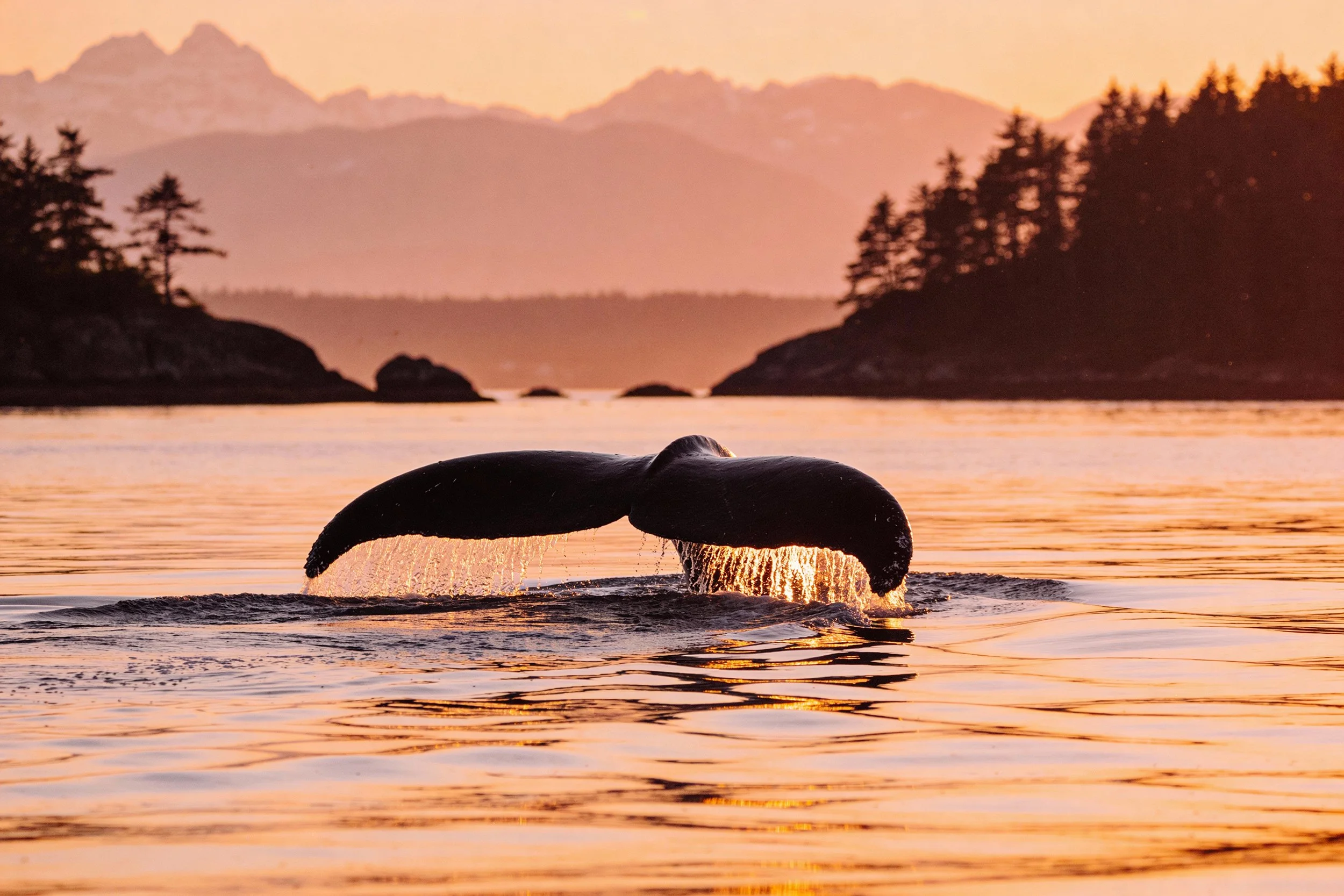
There are places that feel untouched, and then there are places that feel ancient. The Great Bear Rainforest belongs to the latter, a landscape so vast and layered with life that it doesn’t just exist in the present. Moss drapes from old-growth giants like something out of a forgotten world. The ocean moves along the rugged coast, where whales travel with quiet purpose, shaping the steady rhythm of the seasons. And for those who step into it with a camera, it offers something far beyond images.
Why the Great Bear Rainforest Matters
The Great Bear Rainforest is one of the largest remaining intact temperate rainforests on Earth. Stretching along the central and northern coast of British Columbia, it holds an ecological significance that goes well beyond its borders. Towering cedar and spruce forests store massive amounts of carbon, acting as a natural buffer against climate change. Salmon-bearing rivers fuel entire ecosystems, feeding everything from wolves to eagles to the bears that have come to symbolize the region.
But its importance isn’t just ecological, it’s cultural. This land has been stewarded for thousands of years by Indigenous nations, including the Kitasoo/Xai’xais, Heiltsuk, and Gitga’at. Their knowledge, stories, and governance have been essential in protecting this place in a way that modern conservation alone could not achieve.
A Photographer’s Dream (and Challenge)
For wildlife photographers, the Great Bear Rainforest is as close as it gets to a pilgrimage site. It’s not easy. The weather is unpredictable, access is limited, and the conditions demand patience and respect. But that’s exactly what makes it so powerful.
This is a place where you can’t chase wildlife, you wait, you listen, and you become part of the environment. Coastal wolves move like ghosts along the shoreline. Bald eagles gather in numbers that feel almost surreal during salmon runs. And then there are the bears.
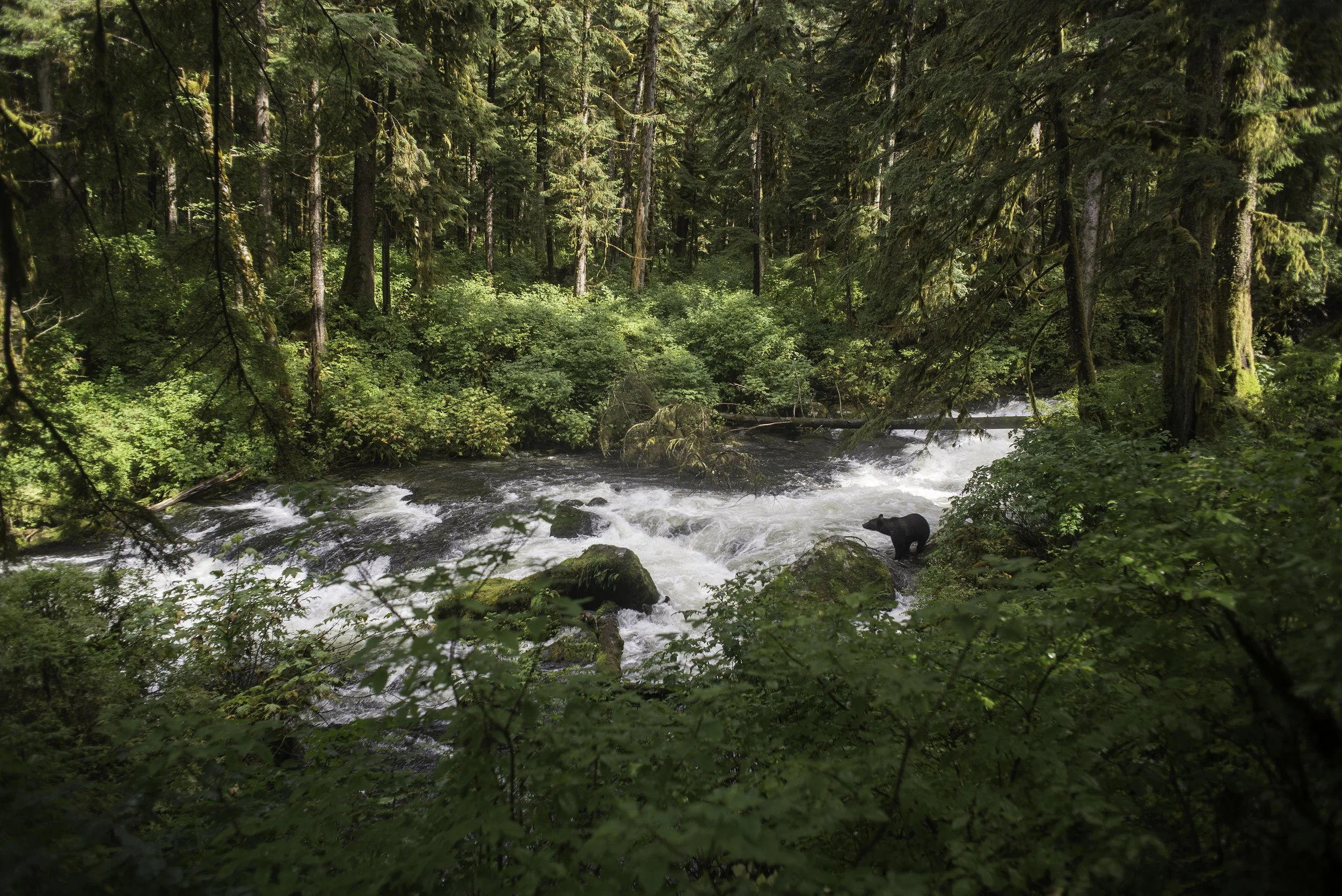
Photographing bears here is not just about proximity or technical skill. It’s about timing, understanding behavior, and being present in a way that allows the moment to unfold naturally. The images that come out of this place can be spectacular when everything aligns.
The Spirit Bear: More Than an Animal
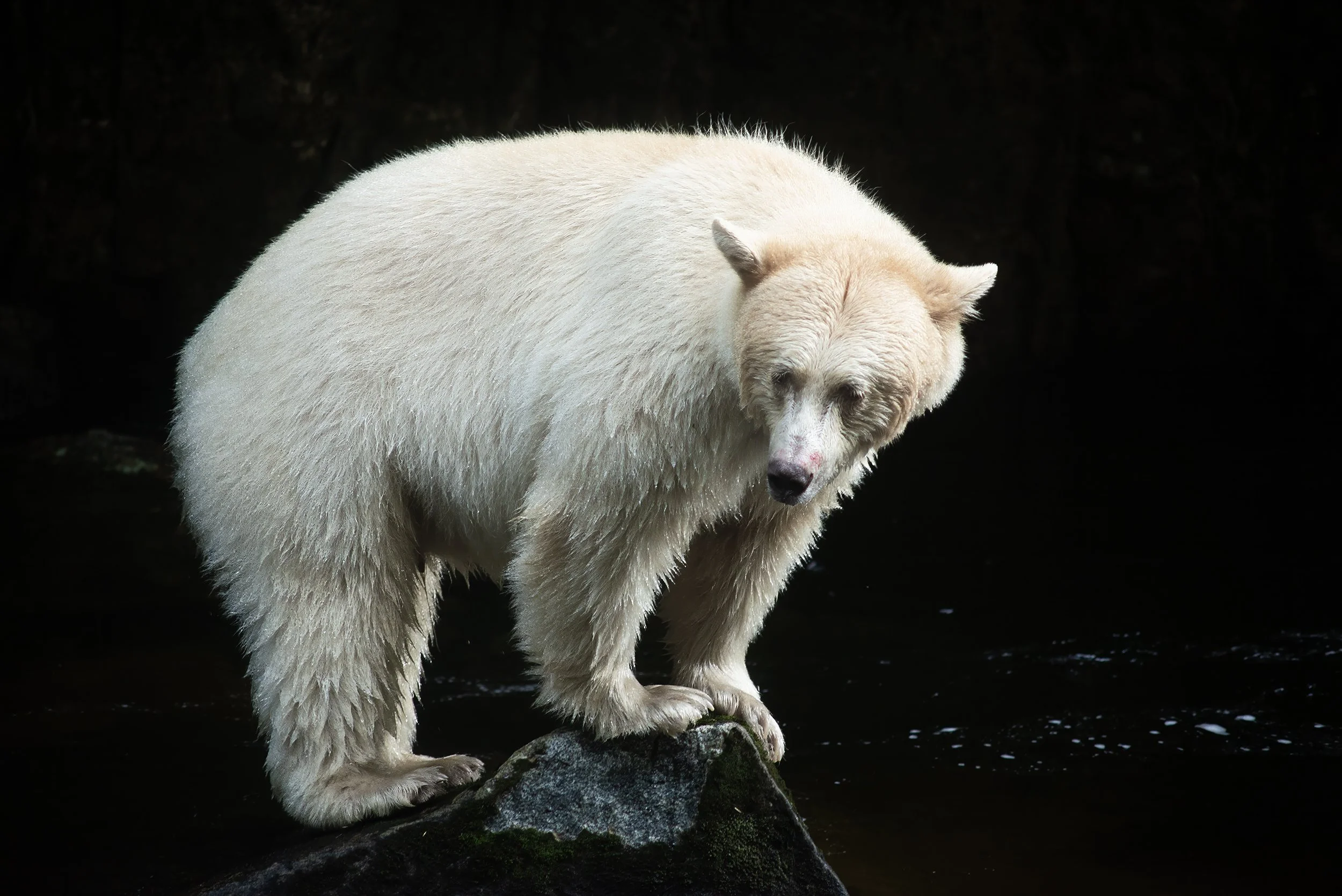
Among the most iconic and elusive subjects in the rainforest is the spirit bear, a rare white variant of the black bear known scientifically as the Kermode bear. Unlike polar bears, their white fur isn’t tied to snow or ice, it’s the result of a recessive gene passed through generations. But to reduce the spirit bear to genetics misses the point entirely.
To the Indigenous peoples of the region, the spirit bear holds deep cultural and spiritual significance. It is a symbol of balance, a reminder, and a teacher. One story, shared by local communities, tells of Raven, the trickster and creator, who turned one in every ten black bears white. Not as an accident, but as a deliberate act, to remind the people of the time when ice covered the land, of the last great glacial age, and of the importance of remembering where we come from. That story reframes everything. The spirit bear isn’t rare just because of biology.
Finding the Spirit Bear
If you go looking for a spirit bear with the mindset of “getting the shot,” you’ll likely leave disappointed. Sightings are never guaranteed. Days can pass in silence, with nothing but rain and the slow movement of rivers. But that’s part of the experience.
Finding a spirit bear requires humility. It requires listening to guides who know the land intimately, respecting the rhythms of the forest, and accepting that the encounter, if it happens, is a privilege, not a right. And when it does happen, it doesn’t feel like a victory. It feels like a moment you were allowed to witness.
The Wolves That Still Elude Me
If there’s one subject that has tested me more than any other in this landscape, it’s the Coastal Sea Wolf. Throughout my guiding career, I’ve spent days waiting for them. Long, quiet days on shorelines, and lagoons, watching tides shift and forests breathe. I’ve seen a few along the way, brief crossings, distant figures moving with that unmistakable shape, but I’ve never captured a photograph of a wolf that I’m truly proud of. It remains one of the biggest holes in my portfolio. And I’m okay with that.
Because the wolf isn’t something you force. It’s an animal I respect more than almost any other, intelligent, adaptable, deeply connected to this coastline and our best friends are their descendants. Until I earn that photograph, until everything aligns in a way that feels right, I won’t publish a wolf image. Some subjects aren’t about checking a box.
The Book That Changed Everything
For me, the Great Bear Rainforest didn’t start with a trip, it started at a kitchen table.
Over 15 years ago, I came across The Last Wild Wolves by Ian McAllister. I remember flipping through its pages, seeing images that didn’t look real, wolves moving through mist, coastlines that felt untouched, a sense of wildness that I only believed was in my dreams. Looking back, it’s hard to overstate the impact. That single book set a trajectory that shaped how I see the world and what I choose to pursue.
More Than a Destination
The Great Bear Rainforest isn’t just a location for photographers chasing portfolio shots. It’s a place that challenges your pace, your expectations, and your relationship with nature. It forces you to slow down. To observe instead of control. And maybe that’s the real reason it matters.
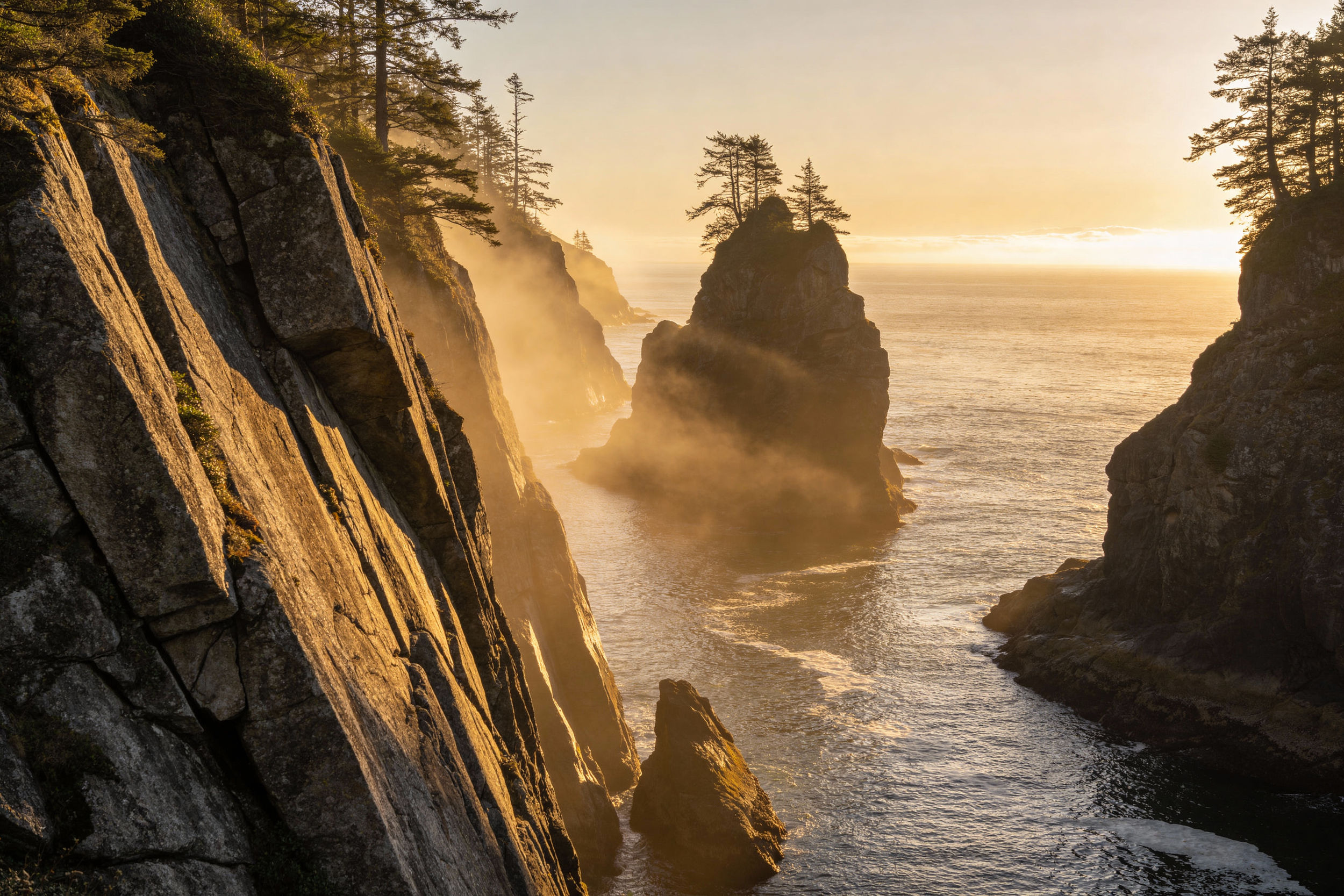
Because in a world that moves faster every year, places like this remind us that some things still operate on their own time. That some stories are older than us. And that sometimes, the most powerful images are the ones that come from simply being present in a place that doesn’t need you.
